
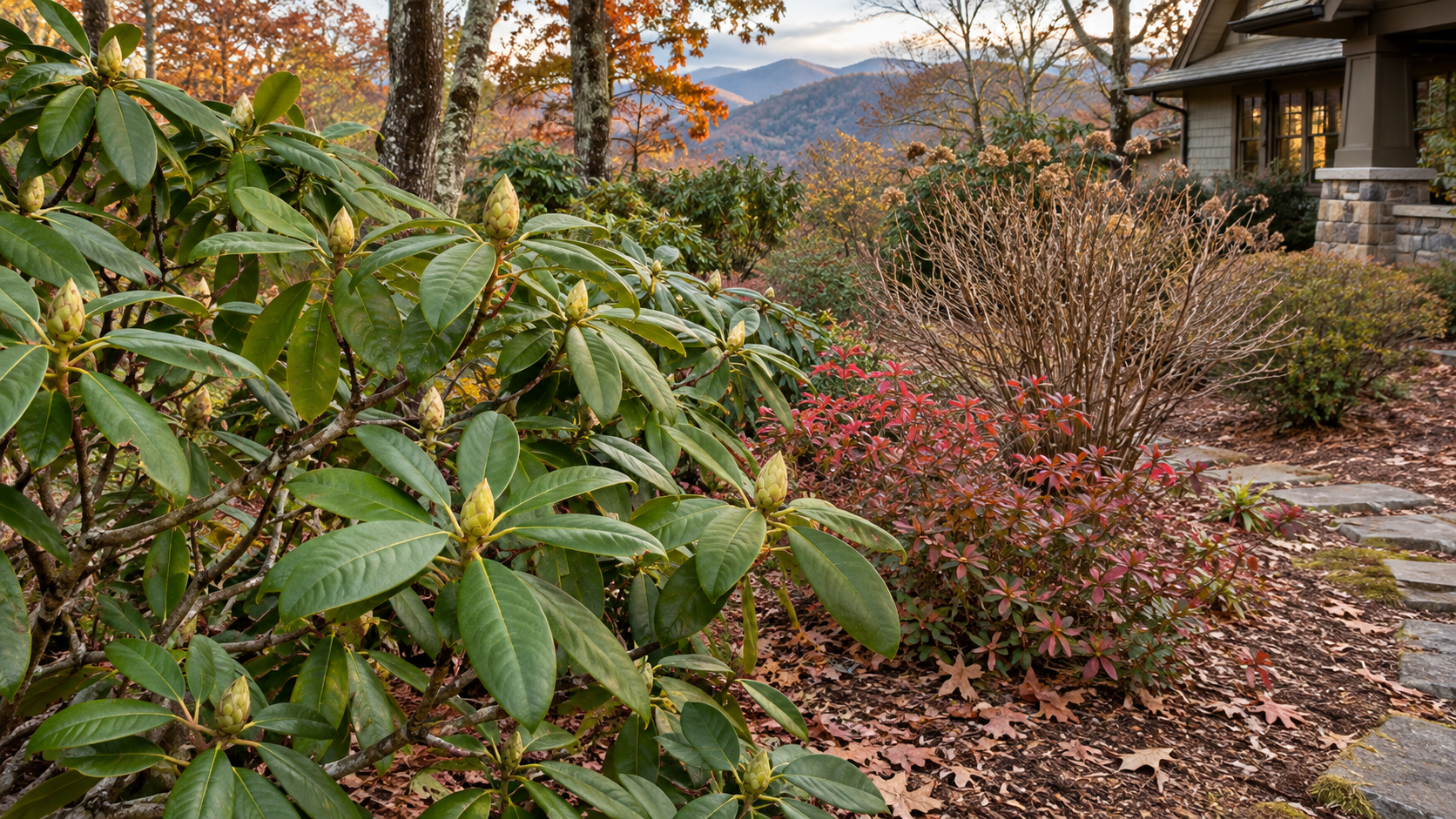
A flowering shrub can look a little untidy in November. A few branches extend beyond the planting bed, leaves collect between the stems, and the temptation is to give everything one last trim before winter.
But those branches may already hold next spring’s flowers.
For homeowners in Asheville and Western North Carolina, fall pruning can accidentally remove flower buds that plants developed months earlier. The damage may not become obvious until spring, when an otherwise healthy shrub produces plenty of leaves and very few blooms.
Snow Creek Landscaping encourages homeowners to approach November pruning with a plant-by-plant plan. Before reaching for the shears, it helps to understand what you might be cutting away.
Next Spring’s Flowers May Already Be on the Branches
Many spring-flowering shrubs bloom on old wood—stems that grew during the previous growing season. These plants develop flower buds before winter and carry them into the following spring.
Pruning those stems in November removes the buds along with the branches. The shrub may survive the haircut perfectly well, but its next flower display can be noticeably smaller.
Waiting until late winter does not solve that problem. If the buds are already present, cutting them off in February still removes spring flowers. For many spring bloomers, the better opportunity for routine shaping comes shortly after flowering ends.
Snow Creek Landscaping considers bloom timing alongside plant size and condition when planning seasonal maintenance. A landscape can look cared for through winter without every shrub receiving a trim.
Leave Azaleas and Rhododendrons Alone
Azaleas and rhododendrons are familiar favorites in Western North Carolina landscapes. Their spring flowers are also easy to sacrifice during an enthusiastic fall cleanup.
By November, these shrubs generally carry the buds for their next flowering season. Shearing the outer growth can remove flower buds across much of the plant, particularly when the goal is to create a tight, uniform shape.
Avoid trimming healthy azaleas and rhododendrons simply to neaten their outlines this month. If shaping is needed, plan it for shortly after their flowers fade.
Snow Creek Landscaping can help homeowners distinguish between a shrub that needs attention now and one whose natural shape can wait until after its spring display.
Skip the Fall Haircut on Forsythia, Lilacs, and Spring Spirea
Forsythia’s arching stems can look unruly after leaves drop. Lilacs may have branches extending beyond their allotted space. Bridal wreath spirea can appear loose compared with the evergreen shrubs nearby.
That does not mean November is the right time to reshape them.
These spring-flowering shrubs carry their upcoming flowers on existing wood. Shortening their stems now can reduce the bloom display homeowners have been waiting for all winter.
One common mistake is treating all spireas alike. Spring-flowering bridal wreath types and summer-flowering Japanese spireas follow different flowering schedules. A maintenance approach suited to one may remove flowers from the other.
Before pruning, identify the plant rather than relying on its general appearance. Snow Creek Landscaping recommends keeping a simple record of shrub names and flowering seasons to make future maintenance decisions easier.
Be Especially Careful With Hydrangeas
Hydrangeas create some of the most common pruning confusion because different types bloom on different wood.
Traditional bigleaf hydrangeas, including many familiar mophead and lacecap varieties, flower on old wood. Oakleaf hydrangeas also carry flower buds on existing stems. Cutting these plants back in November can remove the following season’s blooms—even though their flowers arrive later than those of many spring shrubs.
Panicle and smooth hydrangeas bloom on new growth and have different pruning requirements. Some reblooming bigleaf varieties flower on both old and new wood, but removing old stems can still reduce their early display.
The safest approach when you do not know your hydrangea’s identity is to pause.
Snow Creek Landscaping can help determine which type is growing in your landscape before a cleanup turns into a season of missing flowers.
Avoid These Three November Pruning Mistakes
1. Shearing Every Shrub During Fall Cleanup
A blanket approach overlooks the differences between plants. Hedge shears can remove dozens of bud-bearing tips in minutes, leaving a tidy outline but a disappointing spring.
Separate cleanup tasks from pruning decisions. Removing fallen debris does not require reshaping every nearby shrub.
2. Assuming Bare Stems Are Dead
A deciduous shrub can lose every leaf and still have healthy, living stems carrying next season’s buds. This is especially important with hydrangeas, whose dormant branches may look lifeless.
Do not cut a plant to the ground simply because its winter appearance is sparse. Confirm whether the wood is alive before removing it.
3. Trying to Fix an Oversized Shrub All at Once
A shrub crowding a window or walkway may need a longer-term solution. Repeatedly cutting it back at the wrong time can mean repeatedly losing flowers.
Snow Creek Landscaping can evaluate whether selective pruning, a planned renovation, or replacement with a better-sized plant makes the most sense. The goal is a landscape that fits its space without requiring constant corrective cuts.
What If a Branch Really Needs to Come Off?
Protecting flowers does not mean leaving a broken branch hanging over a walkway.
Dead, damaged, or hazardous branches may need attention regardless of flowering season. Suspected disease also deserves assessment, since the appropriate timing and method can depend on the problem.
Keep necessary work targeted. Removing one broken branch is different from reducing the entire shrub. If a healthy branch must come off for access or safety, recognize that its flower buds will come off too.
For larger limbs, uncertain plant health, or extensive damage, seek professional guidance before making cuts.
Protect Your Spring Display With Snow Creek Landscaping
November is a good time to identify plants, note crowded areas, and plan pruning around each shrub’s flowering cycle. Photograph problem spots and record which plants need attention after blooming.
You do not have to resolve every uneven branch before winter.
Snow Creek Landscaping helps homeowners in Asheville and surrounding Western North Carolina communities make thoughtful seasonal maintenance decisions. From identifying flowering shrubs to planning selective pruning, the right approach protects the details that make a landscape worth enjoying.
Contact Snow Creek Landscaping to plan seasonal landscape care and help preserve next spring’s flowers.
