
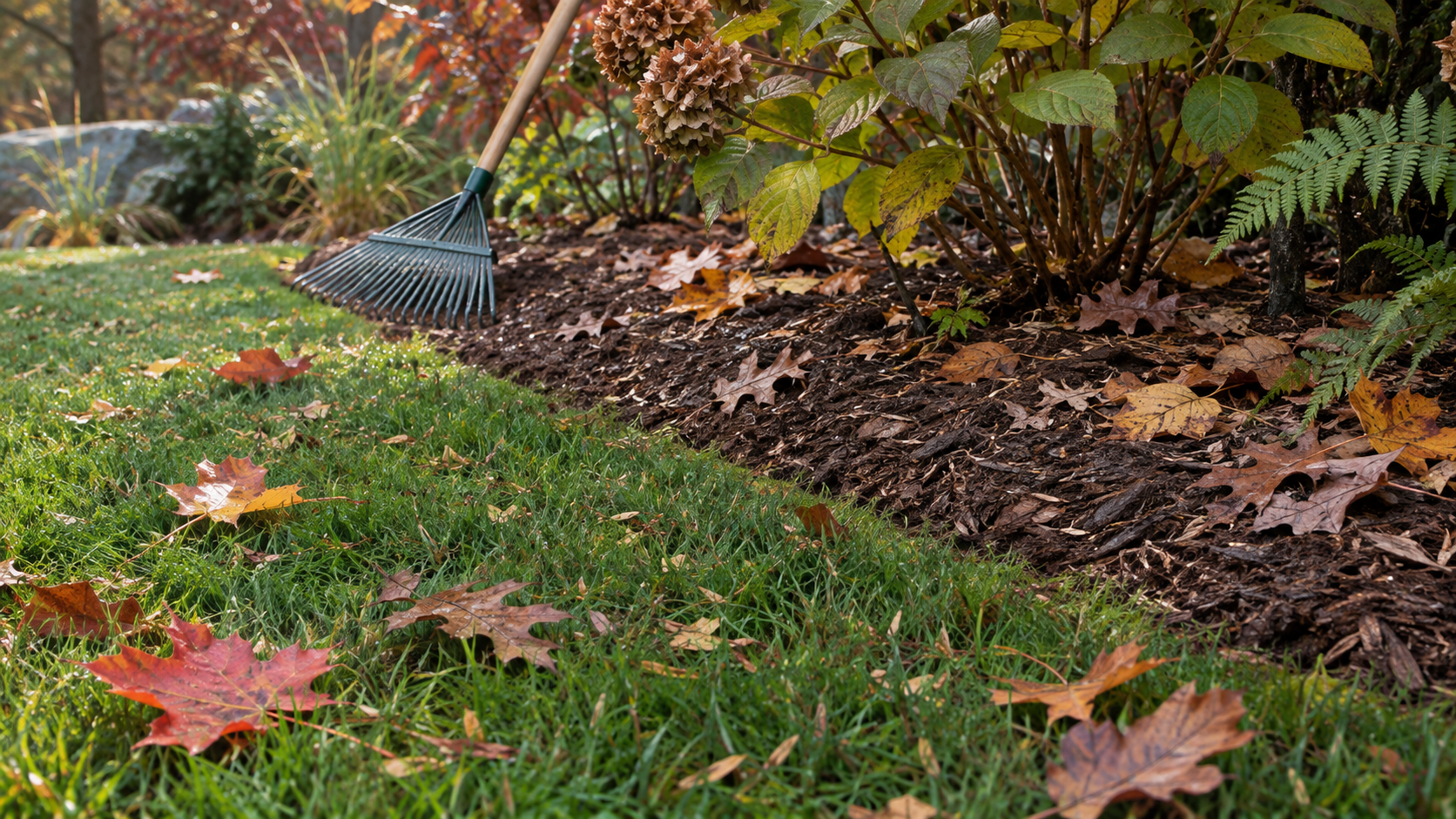
Fall leaves are part of what makes Asheville beautiful. Once they settle across your landscape, though, they raise a practical question: What should you actually do with them?
Raking everything into bags can mean losing a useful resource. Leaving everything untouched can create problems for your lawn and smaller plants. The best approach depends on where the leaves land, how thickly they accumulate, and what is growing underneath.
At Snow Creek Landscaping, we help Western North Carolina homeowners look at fall maintenance as an opportunity to support the whole landscape. With leaves, that starts with giving them the right destination.
On Lawns: Mulch Light Coverage, Move Heavy Accumulations
A scattering of leaves across an established lawn is different from a thick blanket that hides the grass.
When coverage is light, mowing leaves into small pieces can return organic material to the soil. Those fragments should settle between the grass blades, leaving the lawn clearly visible. If mowing leaves a noticeable carpet of debris, remove the excess and use it elsewhere.
Heavy accumulations need attention because they block sunlight. Once wet leaves settle into a dense mat, they can weaken the grass underneath and leave thin or bare areas.
For Asheville homeowners, the practical decision is often straightforward:
Grass remains clearly visible: Mulching the leaves with a mower may be enough.
Leaves conceal the lawn: Collect some before mowing the remainder.
Leaves are wet and matted: Move them before they become harder to manage.
Grass was recently seeded: Remove leaves gently so young seedlings receive light without being disturbed.
Work in manageable rounds as leaves fall. Waiting until every tree is bare can turn a simple mowing pass into a much larger removal project.
In Planting Beds: Use Leaves With Room for Plants to Breathe
Leaves can be useful around established shrubs and trees, where they function as organic mulch. As they break down, they contribute organic matter while helping cover exposed soil.
However, planting beds should not become the dumping ground for everything collected from the lawn.
For maintained beds, shredded leaves are generally easier to distribute than whole leaves. They create a more even layer and are less likely to form a heavy mat. Keep them several inches away from trunks and woody stems, and avoid burying the crowns of perennials or covering low-growing plants.
Check the mulch already in place before adding more. A bed with ample existing mulch may need only a light scattering of leaves—or none at all.
At Snow Creek Landscaping, we consider the plants, existing groundcover, and appearance of each bed when planning seasonal maintenance. A broad shrub border can accommodate leaves differently than a tightly planted entrance garden.
The goal is an even, useful covering that fits the planting, with individual plants still visible and space around their bases.
Along Woodland Edges: Let the Natural Leaf Layer Remain
Woodland edges are often the best place to leave fallen leaves relatively undisturbed.
Beneath mature trees and around naturalized plantings, leaf litter is part of the landscape’s normal cycle. It provides cover for overwintering insects and other small wildlife while gradually returning organic material to the soil. N.C. Cooperative Extension encourages retaining leaves in appropriate landscape areas for these benefits.
This approach suits many Western North Carolina properties, where maintained lawns transition into wooded slopes or informal borders.
Preserve the leaves already scattered there, but avoid blowing the entire property’s collection into one deep ridge. A natural layer across a broad area is very different from a concentrated pile against tree trunks.
If supporting overwintering wildlife is a priority, leave some whole leaves untouched in these quieter spaces. Shredding serves a practical purpose on lawns and in maintained beds, while undisturbed woodland litter serves another.
Snow Creek Landscaping can help define that transition so the property looks intentional: maintained lawn and clean bed edges in the foreground, with a softer, natural woodland floor beyond.
In Compost: Turn Excess Leaves Into a Future Resource
When the lawn cannot absorb more shredded leaves and the beds have enough coverage, compost offers another destination.
Dry leaves supply the carbon-rich “brown” material used in composting. Combine them with appropriate “green” materials, such as vegetable scraps, coffee grounds, or modest amounts of fresh grass clippings. A pile made entirely of dry leaves will break down differently and usually more slowly than a balanced, actively managed compost pile.
Shredding leaves helps speed decomposition. Keep the mixture damp rather than saturated, and turn it periodically to introduce air. Saving some dry leaves also gives you material to mix with kitchen scraps later.
Leaves can also be collected separately to make leaf mold—a slowly decomposed material useful for improving soil. This takes patience, making it a good option for homeowners with space for a dedicated bin or contained pile.
Keep either system somewhere accessible. A compost area that is difficult to reach is much less likely to become part of your routine.
Where Leaves Should Be Removed
Even a landscape that retains leaves needs a few clear boundaries.
Keep walkways, steps, and frequently used patios free of slippery accumulations. Clear drainage inlets, channel drains, and swales so leaves do not interfere with water movement. On sloping Asheville properties, pay particular attention to places where runoff carries leaves into concentrated piles.
Plant health can also change the decision. Leaves associated with a diagnosed disease or pest problem may require removal rather than redistribution. Most home compost piles do not reliably reach temperatures that destroy plant pathogens, so questionable material deserves separate consideration.
Give Each Part of Your Landscape the Right Approach
A single property may benefit from all four options: mowing a light scattering into the lawn, spreading shredded leaves through suitable beds, preserving whole leaves along woodland edges, and composting the surplus.
That is what makes thoughtful leaf management more useful than a blanket instruction to rake everything or leave everything.
Snow Creek Landscaping helps homeowners in Asheville, NC, and surrounding Western North Carolina communities care for landscapes with their specific plants, terrain, and maintenance needs in mind.
Need help deciding what should stay and what should go? Contact Snow Creek Landscaping to plan fall maintenance that keeps your property looking cared for while putting useful organic material to work.
