
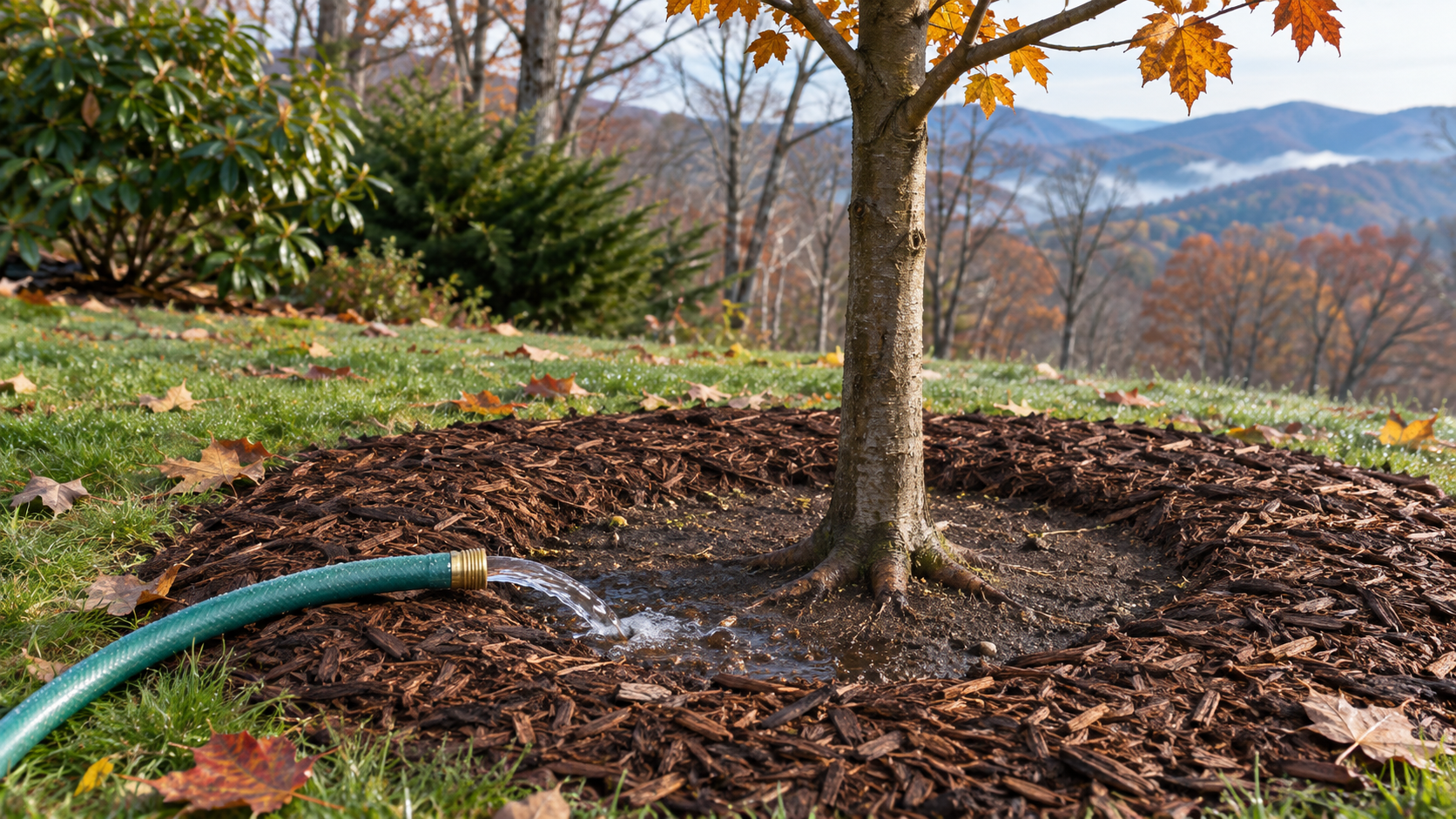
Cooler days and falling leaves can make it feel like the landscape is ready to take care of itself until spring. But if you recently planted a tree, November is still a time to pay attention to watering.
Newly planted trees may need supplemental water throughout November—even after their leaves have dropped. The deciding factors are rainfall, moisture around the roots, and whether the ground is frozen.
For homeowners in Asheville and Western North Carolina, Snow Creek Landscaping encourages a simple approach: check the soil, consider the weather, and adjust care to the tree’s needs.
Why Watering Still Matters After Planting
A newly installed tree has a limited root system. Unlike an established tree, it cannot draw moisture from a broad area of the surrounding landscape. Much of its access to water initially depends on the original root ball.
That root ball can dry out differently from the soil around it, especially when a tree was grown in a nursery container. Nearby soil may feel damp while the material holding the tree’s roots is already becoming dry. NC State Extension identifies trees and shrubs planted within the past two years as particularly vulnerable to drought stress.
Installation is the beginning of establishment. Snow Creek Landscaping encourages homeowners to make watering checks part of their routine as new trees settle into the landscape.
Does November Rain Provide Enough Water?
Sometimes it does. The challenge is knowing whether rain actually reached the root ball.
A brief shower may wet mulch and darken the soil surface without delivering enough moisture below it. A rain gauge can help track precipitation, but checking the soil tells you more about what your tree received.
After rainfall, gently move aside a small section of mulch and check moisture within the root ball and in the nearby soil. Avoid judging the entire planting area by one damp spot.
If the root ball is adequately moist, additional watering can wait. If it remains dry beneath the surface, the tree may still need water. Maintaining steady moisture without creating soggy conditions is especially important while new roots establish.
Snow Creek Landscaping recommends treating rainfall as part of the watering plan, with soil checks helping determine whether it was enough.
How to Check Soil Moisture
You do not need complicated equipment to make a useful moisture check. A small hand trowel and a careful touch can help.
Gently examine the soil several inches below the surface, working toward approximately six inches where practical without damaging roots. Check more than one location around the planting area.
Use these observations as a guide:
Moist soil: Hold off on watering and check again later.
Dry soil: Apply water slowly so it can soak into the root ball.
Saturated soil or persistent puddles: Stop watering and investigate drainage.
For the first couple of weeks after installation, check moisture daily. Once the tree is beyond that initial period, check at least weekly and adjust for conditions. A moisture check does not automatically mean it is time to water.
How Do Colder Temperatures Change the Routine?
Cooler weather generally slows moisture loss, so a tree may need less frequent watering than it would during summer. However, leaf drop and the first frost do not necessarily mean its water needs have ended.
Roots can remain active while soil conditions allow, even when growth above ground has slowed. Newly planted evergreens deserve particular attention because their foliage continues losing moisture during winter.
During dry stretches, choose a mild day when the ground is unfrozen. Colorado State University Extension recommends winter watering when temperatures are above 40°F and soil can absorb the water. Do not try to water frozen ground; reassess moisture after it thaws.
For a new tree in Western North Carolina, a cold night is a reason to reassess the routine, rather than put watering checks aside for the season.
Water Slowly and Reach the Root Ball
When water is needed, apply it directly to the soil at a gentle rate. A hose running slowly, properly positioned drip irrigation, or an appropriate watering bag can help water soak in.
Focus on moistening the root ball and the immediately surrounding soil. Avoid quick surface sprinkling or applying water so fast that it runs away from the planting area.
There is no single hose runtime that works for every tree. Tree size, root-ball dimensions, soil texture, and water flow all affect how much reaches the roots. Check moisture again several hours afterward to see whether the application was effective.
If you are unsure how to translate these steps into a routine for your installation, ask Snow Creek Landscaping for guidance specific to your tree and planting site.
Mulch Helps Protect Moisture
A properly applied mulch layer helps conserve soil moisture and moderate temperature changes around developing roots. NC State Extension recommends keeping mulch away from the trunk and avoiding excessive depth.
Check existing mulch before adding more. Keep the trunk base exposed, and remember that mulch supports watering care—it cannot replace moisture checks.
Give New Trees Attention Beyond Installation Day
November tree care comes down to observation. Recent rainfall, a cold morning, or bare branches cannot tell you everything happening around the roots.
Check the soil regularly, water when needed, and allow wet ground to drain. Those small habits help support the investment you have made in your landscape.
Have questions about caring for newly planted trees? Contact Snow Creek Landscaping for help with tree installation and seasonal landscape care in Asheville and Western North Carolina.
