
The Best Ornamental Grasses for Fall Color and Texture in Asheville Landscapes
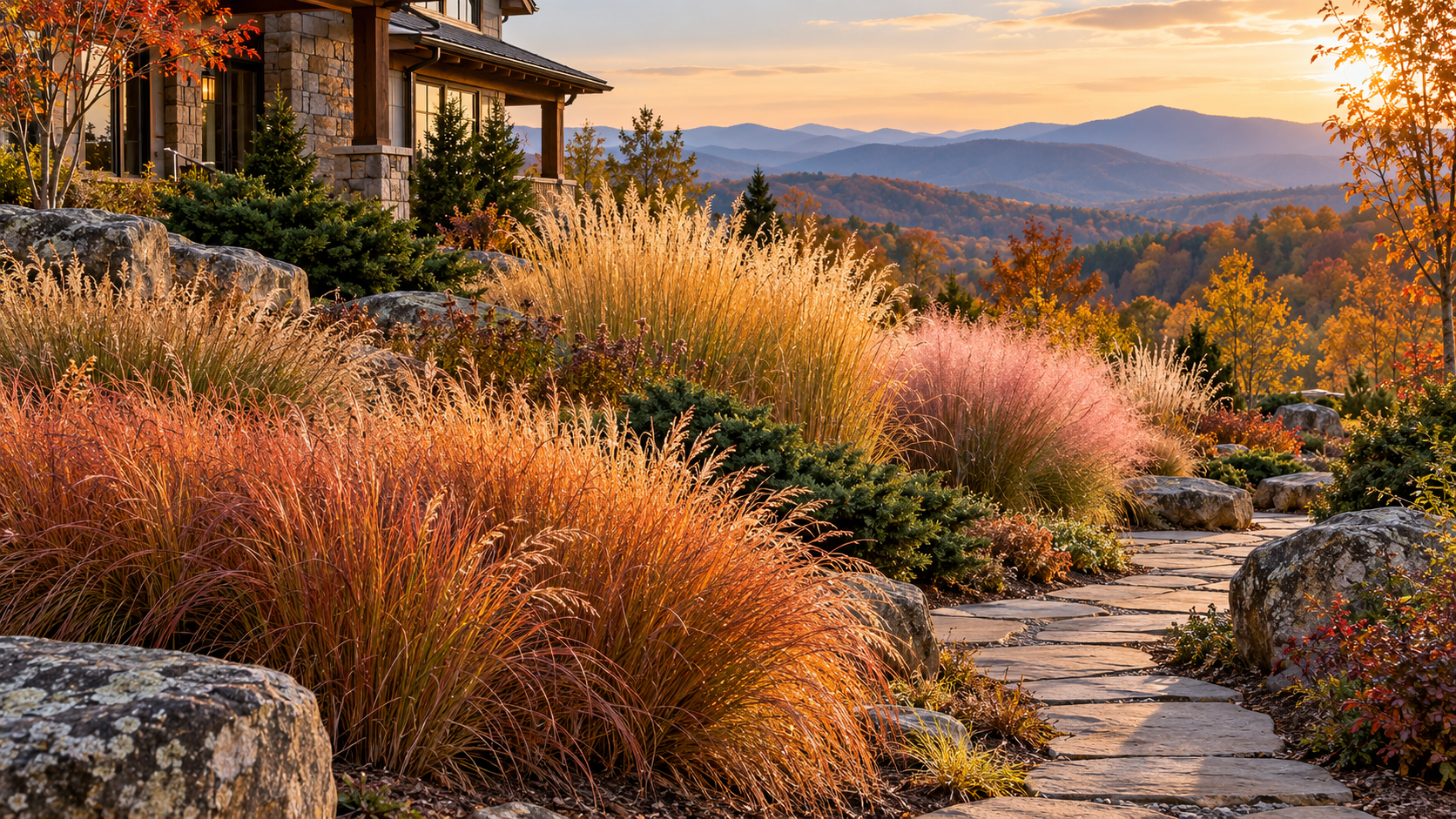
Fall in Asheville brings spectacular mountain views, crisp mornings, and landscapes filled with changing leaves. But trees are only part of the seasonal picture. Ornamental grasses offer another way to capture autumn’s beauty, bringing copper foliage, golden stems, airy flowers, and movement to outdoor spaces.
Whether framing a walkway or softening a stone retaining wall, grasses can make a landscape feel more inviting. Their fine texture provides contrast beside evergreens, broad-leaved shrubs, and hardscape features.
For homeowners in Asheville and surrounding Western North Carolina communities, choosing the right grass starts with understanding the planting site. Snow Creek Landscaping can help you incorporate varieties that complement your home, suit your growing conditions, and contribute interest beyond the fall season.
Little Bluestem: Rich Copper Color for Sunny Landscapes
Little bluestem (Schizachyrium scoparium) is an excellent choice for homeowners who want noticeable autumn foliage. This native grass typically grows about two to four feet tall, forming upright clumps with blue-green summer foliage.
As the season changes, its leaves develop warm copper, bronze, and orange tones. Fine seed heads add another layer of texture, and the dried foliage can remain attractive through winter.
Little bluestem performs best in full sun and well-drained soil. Once established, it tolerates drought, making it useful for sunny locations that occasionally become dry. North Carolina Extension Gardener Plant Toolbox
Consider using it in repeated groups along a driveway, beside boulders, or throughout a naturalistic planting bed. Snow Creek Landscaping can position these groupings to connect different areas of your landscape without making the design feel overly formal.
Switchgrass: Height, Structure, and Golden Fall Interest
Switchgrass (Panicum virgatum) brings a taller, more architectural presence to planting beds. Its upright foliage and delicate flower heads create a balance of structure and softness.
‘Northwind’ is a useful cultivar for homeowners who prefer a defined vertical shape. Its foliage transitions toward golden yellow in fall, while its fine flower panicles add an airy quality above the leaves. The standing growth also provides winter interest. North Carolina Extension Gardener Plant Toolbox
Use switchgrass toward the back of a sunny border, as a backdrop for shorter perennials, or to create a seasonal visual buffer around a seating area. Because it is deciduous, it should be paired with evergreens wherever year-round screening is important.
Snow Creek Landscaping can help match the cultivar’s mature dimensions to the space available, keeping taller grasses from overwhelming smaller beds or obstructing views.
Pink Muhly Grass: A Cloud of Autumn Color
Few ornamental grasses create a fall display quite like pink muhly grass (Muhlenbergia capillaris). Its fine green foliage becomes the foundation for masses of delicate pink flowers that appear suspended above the plant.
The effect is especially striking when sunlight passes through the flower heads. Rather than producing a solid block of color, pink muhly brings a translucent, almost misty quality to the landscape.
This grass prefers a sunny site with good drainage. Although it can be an attractive option for Asheville-area landscapes, exposure, elevation, and winter conditions should guide its placement. North Carolina Extension Gardener Plant Toolbox
Planting several together creates a stronger visual effect than scattering individual plants throughout a bed. Snow Creek Landscaping can evaluate whether your property offers a suitable location and arrange the planting where its autumn flowers will receive flattering light.
Indiangrass: Warm Color for Larger Planting Areas
Indiangrass (Sorghastrum nutans) is another native option with strong seasonal appeal. Its tall growth, golden flower heads, and yellow-orange fall foliage make it particularly attractive in expansive, naturalistic landscapes.
It tolerates rocky and clay soils and offers wildlife value, including seeds used by songbirds. Its substantial presence makes it a good candidate for meadow-style plantings and larger borders. North Carolina Extension Gardener Plant Toolbox
For residential design, placement matters. A tall grass beside a narrow entrance can feel crowded, while the same plant along an open property edge can look beautifully proportioned.
Consider pairing indiangrass with fall-blooming perennials, leaving enough room for each plant’s mature form. Snow Creek Landscaping can help create a layered composition that looks intentional from both nearby patios and windows inside your home.
River Oats: Distinctive Texture for Partly Shaded Spaces
Many ornamental grasses favor sunshine, but river oats (Chasmanthium latifolium) offers an option for partly shaded planting areas.
Also called inland sea oats, this native grass features broad leaves and flattened, dangling seed heads. Those seed heads provide distinctive texture as they mature, making the plant appealing along woodland edges and shaded garden paths.
River oats grows well in moist, well-drained soil with partial sun or shade. However, it readily self-seeds and can spread beyond its original planting area. North Carolina Extension Gardener Plant Toolbox
That habit makes it better suited to naturalistic settings where some expansion is welcome. For a tightly maintained bed, another selection may be easier to manage. Snow Creek Landscaping can help you weigh its beauty against the maintenance needs of your particular landscape.
Design With Repetition, Contrast, and Movement
The most effective grass plantings feel connected to the surrounding landscape. Start with a limited selection and repeat it in groups rather than collecting many unrelated varieties.
Place fine-textured grasses beside plants with larger leaves to make both stand out. Use evergreen shrubs as a backdrop for golden foliage or pale seed heads. Along stonework, arching leaves can soften hard edges and bring movement to an otherwise fixed composition.
Think about viewing angles, too. A grass that catches afternoon sunlight may become a focal point from your kitchen window. Snow Creek Landscaping can organize these relationships into a design that feels cohesive throughout the seasons.
Plan for Establishment and Seasonal Care
Ornamental grasses still need thoughtful planting and care. Match each selection to the site’s sunlight, drainage, and available space, and water new plants consistently while their roots establish.
Fall installation should be timed with local conditions in mind. At colder or higher-elevation sites, spring may be preferable for establishing certain warm-season grasses.
Where practical, leave attractive stems standing through winter, then schedule appropriate cutbacks before new growth begins. Snow Creek Landscaping can help you select, place, and maintain ornamental grasses that bring lasting color, texture, and character to your Asheville landscape.
