
How to Use Evergreens to Anchor a Fall Landscape Design
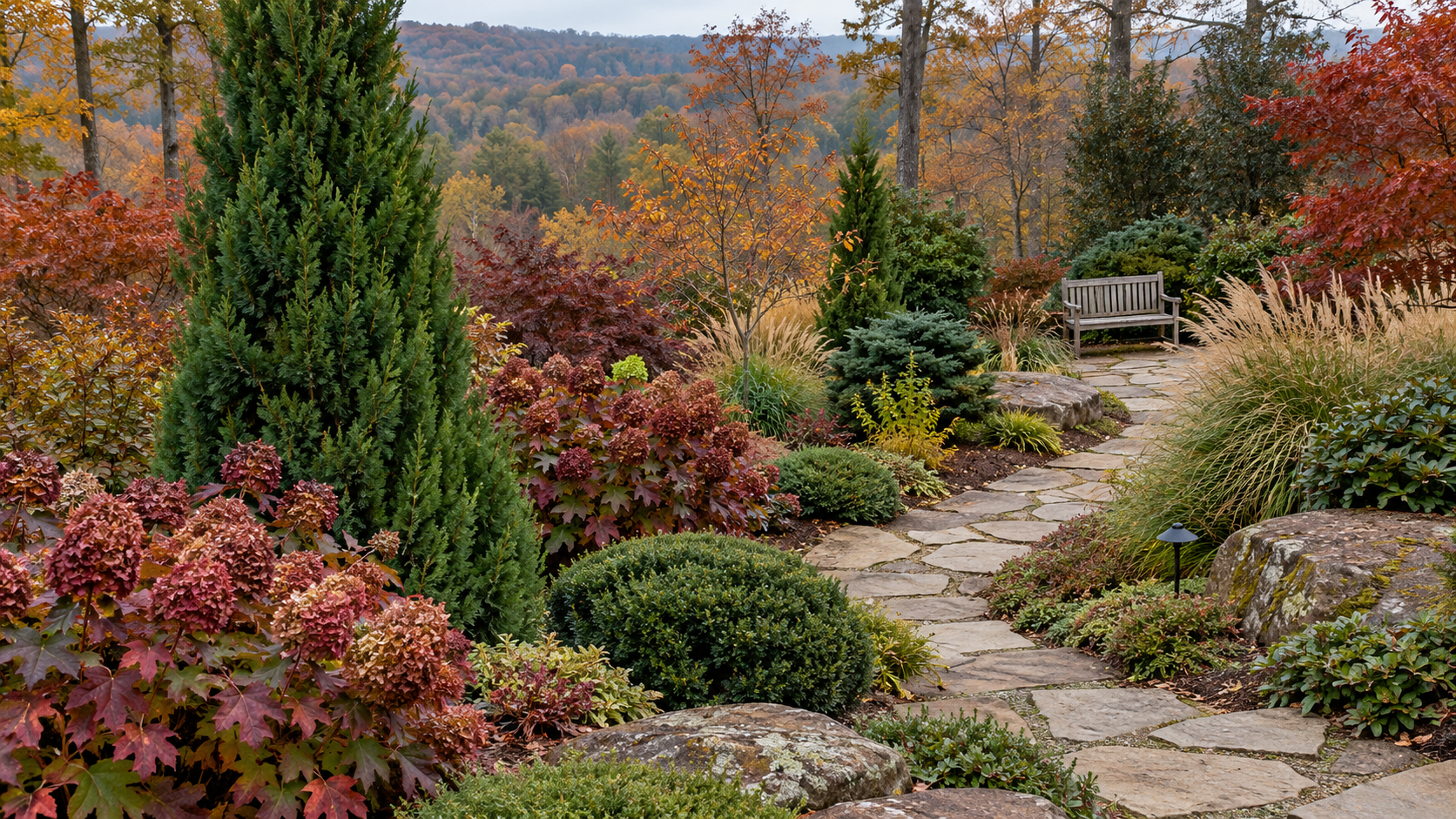
Fall in Asheville brings some of the most beautiful scenery of the year. Maples turn brilliant shades of orange and red, ornamental grasses catch the afternoon light, and cooler temperatures make outdoor spaces inviting again. But once those colorful leaves fall, what holds your landscape together?
The answer often comes down to evergreens.
Evergreen trees and shrubs provide the lasting structure that keeps a landscape attractive through changing seasons. They frame entrances, define planting beds, create privacy, and give fall color a stronger backdrop. For homeowners throughout Asheville and surrounding communities, Snow Creek Landscaping can help turn these dependable plants into the foundation of a thoughtful fall landscape design.
Start With Structure Before Adding Seasonal Color
Think of evergreens as the framework of your landscape. Flowers, colorful foliage, and seasonal containers add personality, but permanent plants give the overall design its shape.
Before choosing plants, look at your property from the street, your front entrance, and the windows you use most. Where does the landscape feel empty? Which areas need definition? What will remain visually interesting after deciduous trees lose their leaves?
An evergreen near a broad, blank wall can soften the architecture. A grouping beside a patio can make the space feel more settled. Low evergreen shrubs can outline a walkway without hiding the entrance.
Snow Creek Landscaping can help identify these anchor points so each plant serves a purpose within the larger design.
Use Evergreens as a Backdrop for Fall Color
One of the most effective ways to use evergreens is to place them behind plants that change with the seasons.
Dark green foliage makes golden grasses, burgundy leaves, and orange autumn foliage easier to appreciate. Without that background, seasonal plants can blend into neighboring trees or disappear against an open view.
Imagine a gently curved planting bed with evergreen shrubs toward the back, oakleaf hydrangeas in the middle, and lower perennials along the front. As the hydrangea foliage changes, the evergreens provide a steady visual background. Later, when leaves drop, the bed still has substance.
The goal is contrast with continuity. Snow Creek Landscaping can combine permanent greenery with seasonal plants so the landscape feels connected throughout the year.
Build Layers With Different Heights and Forms
A landscape anchored by evergreens does not need to look like a solid green wall. Different heights, shapes, and textures create depth.
Start with a taller evergreen where vertical structure is needed. Add medium shrubs to connect that height to the surrounding planting beds. Finish with lower plants that soften edges and leave pathways open.
Upright forms can emphasize an entrance or mark a transition between outdoor spaces. Rounded shrubs create a softer appearance around patios. Spreading evergreens can help connect larger plants visually.
Avoid repeating the same shape everywhere. A few complementary forms usually create a more natural composition than a collection of unrelated specimens. Snow Creek Landscaping can help balance these layers while preserving views and allowing room for mature growth.
Choose Plants That Fit Your Asheville Property
A successful evergreen design begins with the growing conditions. Asheville-area properties vary in elevation, sunlight, drainage, and exposure, so a plant that thrives on one site may struggle on another.
Eastern red cedar can provide substantial evergreen structure in a sunny location with adequate space. It tolerates challenging soils, but continuously wet ground is unsuitable. Catawba rhododendron offers broadleaf evergreen foliage and a strong connection to the Appalachian landscape; it needs an appropriate site with acidic, well-drained soil and protection from harsh exposure. North Carolina Extension Gardener Plant Toolbox
Other options may include selected hollies, compact conifers, and evergreen groundcovers, depending on the property.
Snow Creek Landscaping can evaluate site conditions, mature dimensions, and maintenance needs before recommending plants. Choosing for the location helps avoid years of corrective pruning or replacing struggling shrubs.
Frame Entrances Without Overcrowding Them
Evergreens are especially useful around front entrances because they provide a welcoming appearance even after seasonal flowers fade.
A pair of appropriately sized shrubs can frame front steps. A small grouping can anchor the corner of a planting bed. Repeating one evergreen variety along portions of a walkway can guide the eye toward the door.
However, plants should complement the home’s proportions. A shrub that looks ideal in a nursery container may eventually cover a window or narrow a walkway.
Allow space between plants and the house for growth and maintenance. Keep sightlines clear around driveways and entrances. Snow Creek Landscaping can plan these relationships so the planting feels inviting as it matures.
Create Privacy While Keeping the Landscape Open
Fall can reveal views that summer foliage concealed. A neighboring driveway, nearby patio, or utility area may become more noticeable as deciduous trees lose their leaves.
Evergreens can address these openings, but screening does not always require a continuous hedge. Staggered groupings can soften an unwanted view while preserving light and a sense of space.
Combining compatible evergreen species can also add visual interest and reduce dependence on a single type of plant. NC State Extension recommends selecting screening plants for the site and considering benefits beyond privacy. NC State Extension
Snow Creek Landscaping can position screening where it makes the greatest difference, including views from inside your home.
Plant Carefully and Continue Watering
Fall can be a favorable planting season, but installation and follow-up care still matter. Cooler weather does not guarantee adequate moisture.
Prepare a planting hole wider than the root ball without setting the plant too deep. Water thoroughly after installation and monitor soil moisture afterward. Mulch helps moderate soil conditions, but keep it away from trunks and stems. N.C. Cooperative Extension
Evergreens continue losing moisture through their foliage during winter, making attention to watering especially important during dry periods. Snow Creek Landscaping can provide guidance tailored to your new plants and the conditions on your property. NC State Extension
Design for the View After the Leaves Fall
The best fall landscape looks beautiful during peak color and still feels complete afterward. Evergreens make that transition possible.
Before adding more seasonal accents, consider whether your property has enough lasting structure. A carefully placed tree, a layered shrub grouping, or a defined evergreen border may do more for the overall design than another temporary splash of color.
Snow Creek Landscaping can help Asheville-area homeowners create landscapes that celebrate autumn while remaining attractive through winter and beyond. With thoughtful placement and suitable plants, evergreens become the anchors that bring the entire landscape together.
