
The Best Trees to Plant This Fall in Asheville, NC
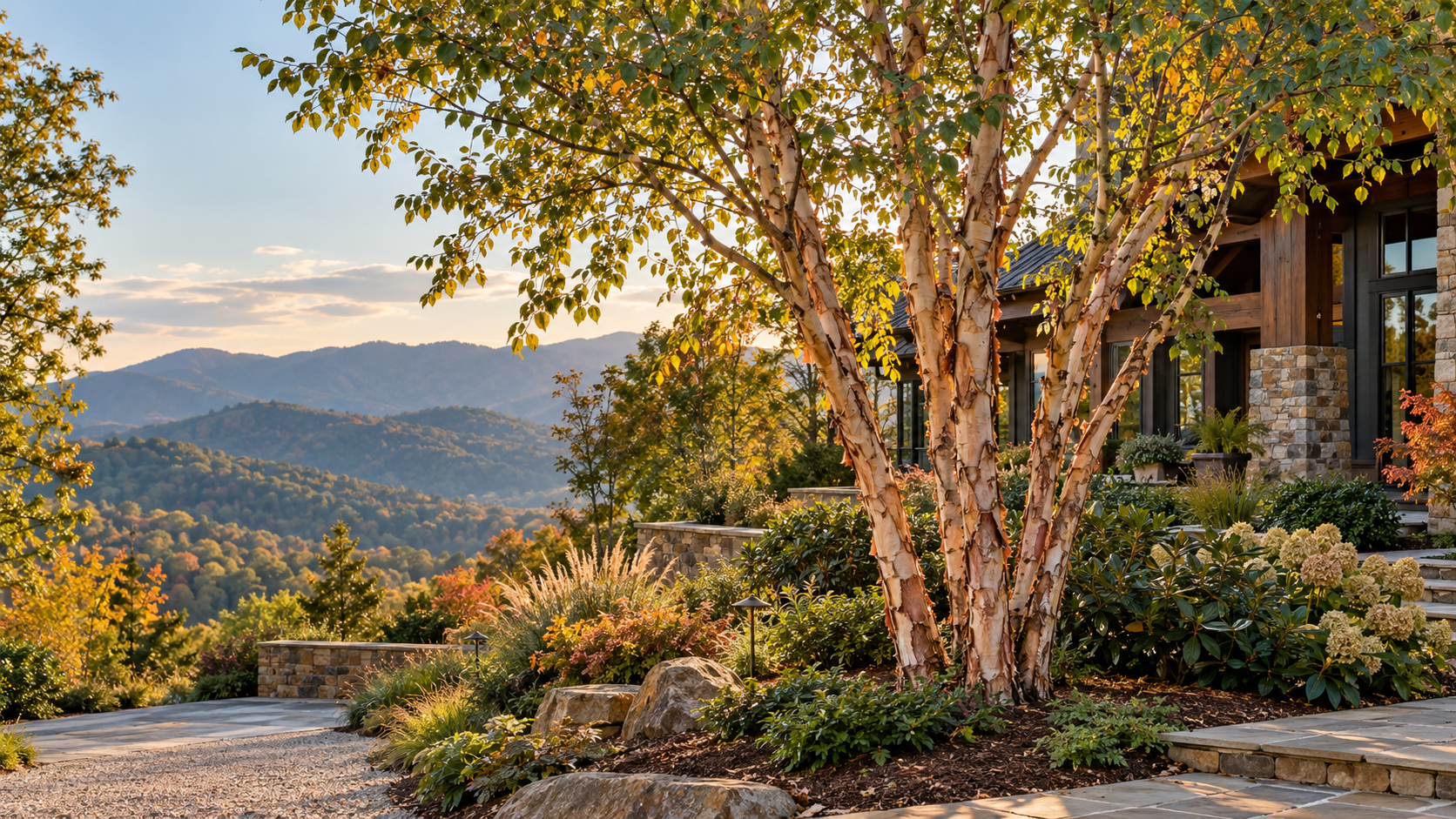
Fall is one of the best times to plant trees in Asheville and throughout Western North Carolina. Cooler air reduces stress on newly installed trees, while the soil generally remains warm enough for roots to continue developing. This gives trees time to begin establishing themselves before winter and prepares them for stronger growth when spring arrives.
Choosing the right tree, however, involves more than selecting one with attractive foliage or flowers. Asheville’s varied elevations, sloped properties, clay-heavy soils, drainage patterns, and changing amounts of sunlight can all influence how well a tree performs.
At Snow Creek Landscaping, we help homeowners choose trees suited to the specific conditions of their properties. From ornamental trees that add seasonal color to larger shade trees that can define a landscape for generations, thoughtful selection and placement can make all the difference.
Here are some of the best trees to consider planting this fall in Asheville, NC, and the surrounding mountains.
1. Red Maple
Red maple is a versatile native tree known for its beautiful fall color. Depending on the tree and its growing conditions, the leaves may turn shades of yellow, orange, or brilliant red.
Red maples can grow into substantial shade trees, making them a strong choice for larger residential properties. They adapt to a range of soil conditions, although they generally perform best where the soil has adequate moisture and drainage.
Because red maples can develop broad canopies and surface roots, proper placement is important. Snow Creek Landscaping can help determine whether your property has enough room for the tree to reach its mature size without conflicting with pavement, utility lines, or structures.
2. Sugar Maple
For classic autumn color, few trees are more impressive than the sugar maple. Its fall foliage can include vibrant combinations of yellow, orange, and red, creating a dramatic seasonal display.
Sugar maples prefer well-drained, moderately moist soil and generally perform best where they have room to develop. They can eventually become large shade trees, so they should be positioned well away from foundations, driveways, septic systems, and overhead utilities.
A thoughtfully placed sugar maple can become one of the most memorable features of an Asheville landscape, providing shade in summer and spectacular color in fall.
3. ‘Winter King’ Hawthorn
‘Winter King’ hawthorn is an excellent ornamental tree for homeowners who want beauty throughout multiple seasons. White flowers appear in spring, followed by red fruits that can persist into winter. As the tree matures, its silvery, exfoliating bark adds another layer of visual interest.
This hawthorn typically remains relatively compact, making it a useful option near patios, walkways, entry areas, and smaller residential landscapes. Its horizontal branching structure gives it a graceful, architectural appearance.
Snow Creek Landscaping may recommend ‘Winter King’ hawthorn when a property needs a manageable focal-point tree that offers flowers, fruit, bark interest, and wildlife value.
4. Witch Hazel
Witch hazel can be grown as a large shrub or small tree, making it a versatile addition to a naturalistic Asheville landscape. Depending on the variety, its unusual ribbon-like flowers may appear in late fall or winter, bringing color to the landscape when many other plants are dormant.
Native witch hazel works especially well along woodland edges, in naturalized planting areas, and in locations with partial shade. Its branching form and yellow flowers give it an understated beauty that feels at home in Western North Carolina.
Because different varieties bloom at different times and reach different sizes, Snow Creek Landscaping can help homeowners select the appropriate witch hazel for their space and design goals.
5. Serviceberry
Serviceberry is a native ornamental tree that provides interest throughout much of the year. Clusters of white flowers appear in early spring, followed by berries that attract birds. In fall, its foliage changes to shades of yellow, orange, and red.
Its smaller size makes serviceberry well suited to residential landscapes, woodland borders, garden beds, and spaces near patios or walkways. It generally prefers well-drained soil and can grow in full sun or partial shade.
For homeowners seeking a beautiful native tree that supports local wildlife without overwhelming the surrounding landscape, serviceberry is an excellent choice.
6. Sourwood
Sourwood is closely connected to the character of the Southern Appalachian Mountains. This native tree produces fragrant clusters of white flowers in summer and brilliant red, orange, and burgundy foliage in fall. Its flowers are valued by pollinators and help produce the region’s prized sourwood honey.
Sourwoods prefer acidic, well-drained soil and full sun to partial shade. They can struggle in heavily compacted soil or locations where water consistently collects.
Snow Creek Landscaping can evaluate the planting area and prepare the site properly, giving this distinctive mountain tree a better opportunity to thrive.
7. Black Gum
Black gum, also known as black tupelo, is one of the finest native trees for fall color. Its glossy green leaves turn striking shades of scarlet, orange, purple, and deep red.
Black gum also supports birds, pollinators, and other wildlife. Once established, it can become a durable and long-lived feature of the landscape. Because it develops a substantial root system and can reach a considerable size, its permanent location should be chosen carefully.
In the right setting, black gum can serve as a dramatic specimen tree or become part of a larger natural landscape design.
8. White Oak
Homeowners with sufficient space may want to consider planting a white oak. Oaks provide food and habitat for a remarkable variety of birds, insects, and other wildlife. A mature white oak also offers generous shade and can become a defining feature of the property.
White oaks require room for both their expanding canopies and extensive root systems. They should be planted a safe distance from houses, pavement, utility lines, and septic systems.
Planting a white oak is a long-term investment. It may grow slowly compared with some trees, but a properly placed oak can add beauty and environmental value for generations.
9. River Birch
River birch is an attractive option for areas of the landscape that retain more moisture. It is especially known for its peeling bark, which reveals shades of cream, cinnamon, salmon, and reddish brown.
This tree can work well near drainage areas, rain gardens, ponds, and lower portions of a property. River birch grows relatively quickly and can become a large tree, so it needs adequate space.
Although it tolerates moist soil, every site is different. Snow Creek Landscaping can assess the property’s drainage and available planting space before recommending river birch.
10. Japanese Maple
Japanese maple remains a favorite for its graceful shape, delicate foliage, and rich seasonal color. It can create a refined focal point near an entrance, courtyard, garden path, or outdoor living space.
These trees generally prefer protection from intense afternoon sunlight and drying winds. Available varieties differ considerably in mature height, canopy shape, growth habit, and leaf color, so choosing the right cultivar is essential.
When properly selected and placed, a Japanese maple can provide striking color and texture without requiring the space of a large shade tree.
Choose the Right Tree for the Right Location
The best tree for your Asheville property is not simply the one that looks most attractive at the nursery. It is the tree that fits the site’s conditions and your long-term goals.
Before planting, consider:
Mature height and canopy width
Sunlight throughout the day
Soil composition and drainage
Available root space
Proximity to buildings and pavement
Overhead and underground utilities
Exposure to wind
Maintenance requirements
Desired shade, privacy, color, or wildlife value
Snow Creek Landscaping evaluates these factors before recommending and installing trees. Planning ahead can help prevent crowded branches, damaged pavement, poor growth, drainage problems, and costly removals later.
Give Your New Trees a Strong Start
Proper planting is every bit as important as selecting the right tree. The planting hole should generally be wider than the root ball but no deeper. The root flare should remain visible at the soil surface rather than being buried under excess soil or mulch.
New trees should be watered thoroughly after installation and monitored regularly during their establishment period. Mulch can help retain moisture and regulate soil temperature, but it should never be piled against the trunk.
Whether you want spring flowers, summer shade, vivid fall color, winter interest, or greater wildlife activity, Snow Creek Landscaping can help you select trees that belong in your landscape.
Contact Snow Creek Landscaping to begin planning the right trees for your Asheville or Western North Carolina property this fall.
