
The Best Evergreen Trees to Plant This Fall in Western North Carolina
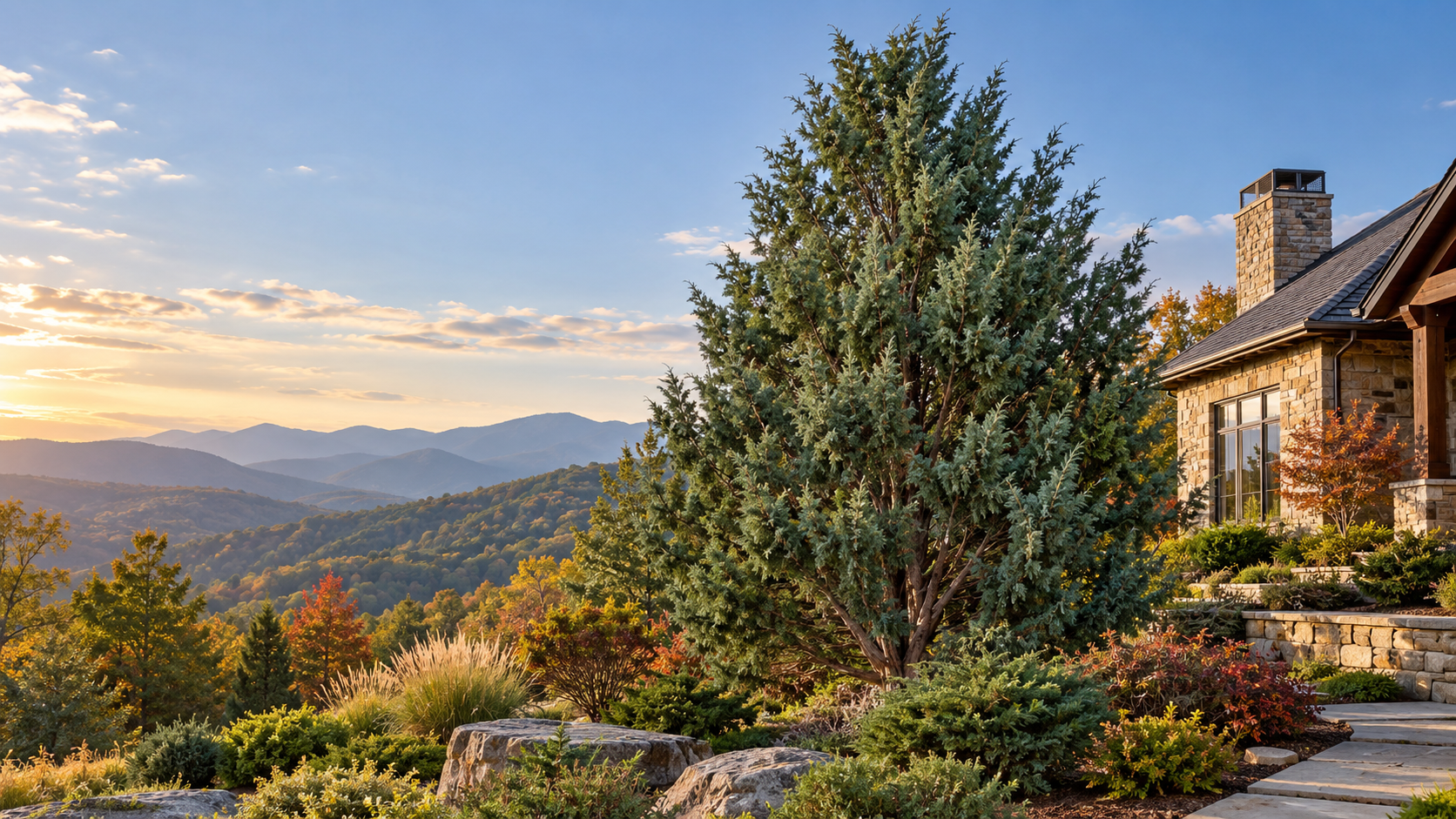
Fall is one of the best times to plant trees in Western North Carolina—and evergreens are especially valuable additions to the landscape. They provide structure, color, privacy, and protection throughout the year, including those cold winter months when deciduous trees have lost their leaves.
For homeowners in Asheville and the surrounding mountain communities, choosing the right evergreen requires more than selecting a tree that looks good at the garden center. Western North Carolina’s elevation changes, clay-heavy soils, rainfall, winter temperatures, and varied sun exposure can all influence how well a tree performs.
The team at Snow Creek Landscaping can help you select evergreens that complement your property and are suited to the specific conditions of your landscape. Here are some of the best options to consider planting this fall.
Why Fall Is a Great Time to Plant Evergreens
Fall’s cooler temperatures reduce the stress newly planted trees experience while becoming established. Although the visible portion of a tree may begin slowing down for winter, its roots can continue growing as long as the soil remains warm enough.
Fall planting also typically means less intense heat and more consistent natural rainfall than trees would encounter during summer. This allows an evergreen to focus its energy on root development rather than supporting rapid top growth.
Planting in the fall gives the tree several months to settle into its new location before the heat of the following summer arrives. However, newly planted evergreens still require regular watering, particularly during extended periods of dry weather.
Snow Creek Landscaping can evaluate drainage, sunlight, available space, and the tree’s mature size before planting. These factors are essential to the long-term success of any evergreen.
1. Eastern Red Cedar
Eastern red cedar is a dependable native evergreen that performs well in a wide range of conditions. Its dense foliage provides year-round color, shelter for wildlife, and excellent screening.
Once established, eastern red cedar is relatively tolerant of drought, poor soil, wind, and exposed planting locations. It can work well along property boundaries, on larger residential properties, or in naturalized sections of the landscape.
Female trees may produce small, blue-gray berry-like cones that provide food for birds. The foliage can vary from green to blue-green and may develop a slightly bronze cast during winter.
Because eastern red cedar can grow considerably wider over time, Snow Creek Landscaping recommends giving it adequate room rather than crowding it against a house, driveway, or walkway.
2. American Holly
American holly is another North Carolina native that offers year-round beauty. Its glossy, deep-green leaves create an attractive backdrop for other plants, while female trees can produce bright red berries when a compatible male pollinator is growing nearby.
American holly is useful as a specimen tree, privacy screen, wildlife planting, or part of a woodland-style landscape. Birds are drawn to its berries and dense branches, making it a strong choice for homeowners who want to support local wildlife.
It generally grows best in well-drained, slightly acidic soil and can tolerate full sun or partial shade. American holly is not usually a fast-growing tree, but its durability and classic appearance make it worth the wait.
Snow Creek Landscaping can help determine where American holly will have enough space to develop its natural pyramidal shape.
3. Green Giant Arborvitae
For homeowners who want privacy, Green Giant arborvitae remains one of the most popular evergreen choices. It grows relatively quickly, develops dense foliage, and can create an attractive living screen without the hard appearance of a fence.
Green Giant arborvitae performs best in full sun to partial shade and soil that drains well. It needs enough room for air circulation and should not be planted in an area that remains saturated after heavy rain.
One common mistake is planting arborvitae too close together in hopes of creating immediate privacy. That may provide faster coverage initially, but overcrowding can create long-term health and maintenance problems.
Snow Creek Landscaping can establish the appropriate spacing based on the size of the trees at installation, their expected mature width, and the amount of privacy desired.
4. Cryptomeria
Cryptomeria, sometimes called Japanese cedar, brings soft texture and graceful movement to the landscape. Its feathery foliage and upright form make it an attractive choice for privacy screens, property borders, and large foundation plantings.
Depending on the variety, cryptomeria can range from a compact accent plant to a substantial evergreen tree. Its foliage may take on bronze or plum tones during colder weather before returning to green in spring.
Cryptomeria generally prefers full sun and moist, well-drained soil. It does not perform well where water consistently collects around its roots. Selecting an appropriate variety is also important because some can become quite large.
The professionals at Snow Creek Landscaping can help homeowners choose a cryptomeria that fits the scale and design of their property.
5. Norway Spruce
Norway spruce is a large, stately evergreen with dark-green needles and gracefully drooping branches. It is well suited to spacious properties where it has room to become a significant landscape feature.
This tree can also serve as a windbreak or visual screen when planted in an appropriate location. Norway spruce generally performs best in full sun with moist but well-drained soil.
Homeowners should carefully consider its mature size. A Norway spruce that looks manageable when young can eventually overwhelm a small space or create conflicts with structures and overhead utilities.
On larger Asheville-area properties, however, Norway spruce can provide impressive year-round structure. Snow Creek Landscaping can evaluate whether the available space is suitable for its long-term growth.
6. Eastern White Pine
Eastern white pine is a fast-growing native tree known for its long, soft needles and open, graceful appearance. It can be an excellent choice for larger landscapes, naturalized areas, or mixed evergreen borders.
White pines can provide height and screening relatively quickly, but they need plenty of space. Their form is usually less dense and formal than arborvitae, making them better suited to relaxed or woodland-inspired landscapes.
They prefer moist, well-drained, slightly acidic soil and generally do best in locations protected from extreme exposure. White pines can experience broken limbs or irregular growth in areas with heavy wind, ice, or restricted root space.
Snow Creek Landscaping can help position white pines where their size and natural character will enhance the property instead of becoming difficult to manage.
7. Southern Magnolia
Southern magnolia is a broadleaf evergreen rather than a traditional needle-bearing conifer. Its large, glossy leaves and fragrant white flowers make it one of the most striking evergreen trees available.
In Western North Carolina, site selection matters. Southern magnolia performs best in protected locations with sufficient sunlight and well-drained soil. Asheville-area winters and elevation changes can affect certain varieties, so choosing one with suitable cold hardiness is important.
Many homeowners love magnolias but underestimate their mature size. Full-sized varieties can become massive, while more compact selections may be better suited to residential properties.
Snow Creek Landscaping can recommend a magnolia variety that provides the desired beauty without outgrowing its surroundings.
A Note About Hemlocks and Leyland Cypress
Eastern and Carolina hemlocks are beautiful native evergreens, but the invasive hemlock woolly adelgid has devastated many trees throughout the Southern Appalachians. Hemlocks may require ongoing monitoring and professional treatment, so homeowners should understand that commitment before planting one.
Leyland cypress is another familiar option, but it is not always the best long-term choice. When crowded or planted in poorly drained areas, Leyland cypress can become vulnerable to disease, dieback, and storm damage. In many situations, Green Giant arborvitae, cryptomeria, native holly, or a mixed evergreen screen may offer greater resilience.
Planting several different species can also prevent a single pest or disease from damaging an entire row of trees.
Choosing the Right Evergreen for Your Landscape
The best evergreen is not simply the fastest-growing or most visually appealing tree. It is the tree that fits your property’s sunlight, drainage, soil, elevation, available space, and overall design.
Before planting, consider what you want the tree to accomplish. Do you need year-round privacy? A windbreak? A focal point? Wildlife habitat? Winter color? The answer will help narrow the options.
Snow Creek Landscaping can assess your property, recommend appropriate evergreen species, prepare the planting area, and position each tree with its mature size in mind. Thoughtful planning now can prevent overcrowding, drainage problems, and expensive removals in the future.
Add Year-Round Beauty This Fall
Whether you prefer the native character of an eastern red cedar, the privacy of Green Giant arborvitae, or the commanding presence of a Norway spruce, fall offers an excellent opportunity to strengthen your landscape.
A well-chosen evergreen can provide decades of shade, screening, color, and natural beauty. Contact Snow Creek Landscaping to start planning an evergreen installation designed specifically for your Asheville or Western North Carolina property.
