
March Mulching Guide for Asheville Landscapes
A Homeowner’s Guide to Healthier, Stronger Spring Growth
March in Asheville is a season of transition. The mountains begin to soften. Temperatures fluctuate. Late frosts are still possible, but longer days signal that your landscape is waking up. For homeowners across Asheville and surrounding areas, March is one of the most important months to refresh mulch and prepare for a healthy growing season.
At Snow Creek Landscaping, we often tell clients: If you get mulching right in March, the rest of your landscape season becomes much easier.
This guide will walk you through why March mulching matters, how to do it correctly, and what to avoid in Asheville’s unique mountain climate.
Why March Is the Ideal Time to Mulch in Asheville
Western North Carolina’s climate creates specific conditions that make timing critical.
In March:
Soil begins warming but hasn’t fully heated
Weeds have not fully emerged
Rainfall increases
Plants are beginning active growth
Landscapes are still accessible before heavy spring growth
Applying mulch now allows you to:
Regulate soil temperature during fluctuating weather
Suppress early weed germination
Protect plant roots from late frost
Retain moisture before warmer months arrive
Improve overall landscape appearance instantly
Snow Creek Landscaping schedules many mulch refresh projects in March because it gives Asheville homeowners a strategic head start before spring growth explodes.
The Benefits of Proper Mulching for Mountain Landscapes
Asheville landscapes are different from flatter regions. Slopes, clay-heavy soils, and frequent moisture create unique challenges.
Proper mulching helps:
1. Regulate Soil Temperature
Mountain climates bring dramatic swings between cold nights and warm days. Mulch acts as insulation, stabilizing soil conditions around roots.
2. Retain Moisture Without Waterlogging
With Asheville’s spring rains, mulch helps prevent evaporation while also reducing soil splash and erosion on slopes.
3. Suppress Weeds Naturally
March mulch blocks sunlight from reaching weed seeds before they germinate. This reduces chemical reliance later.
4. Improve Soil Health Over Time
Organic mulch breaks down and improves soil structure — something especially important in compacted or clay-heavy Asheville landscapes.
5. Elevate Curb Appeal Immediately
Few landscape upgrades offer as dramatic and immediate a visual transformation as fresh mulch.
Snow Creek Landscaping frequently sees homeowners amazed at how refreshed their entire landscape looks in just one day.
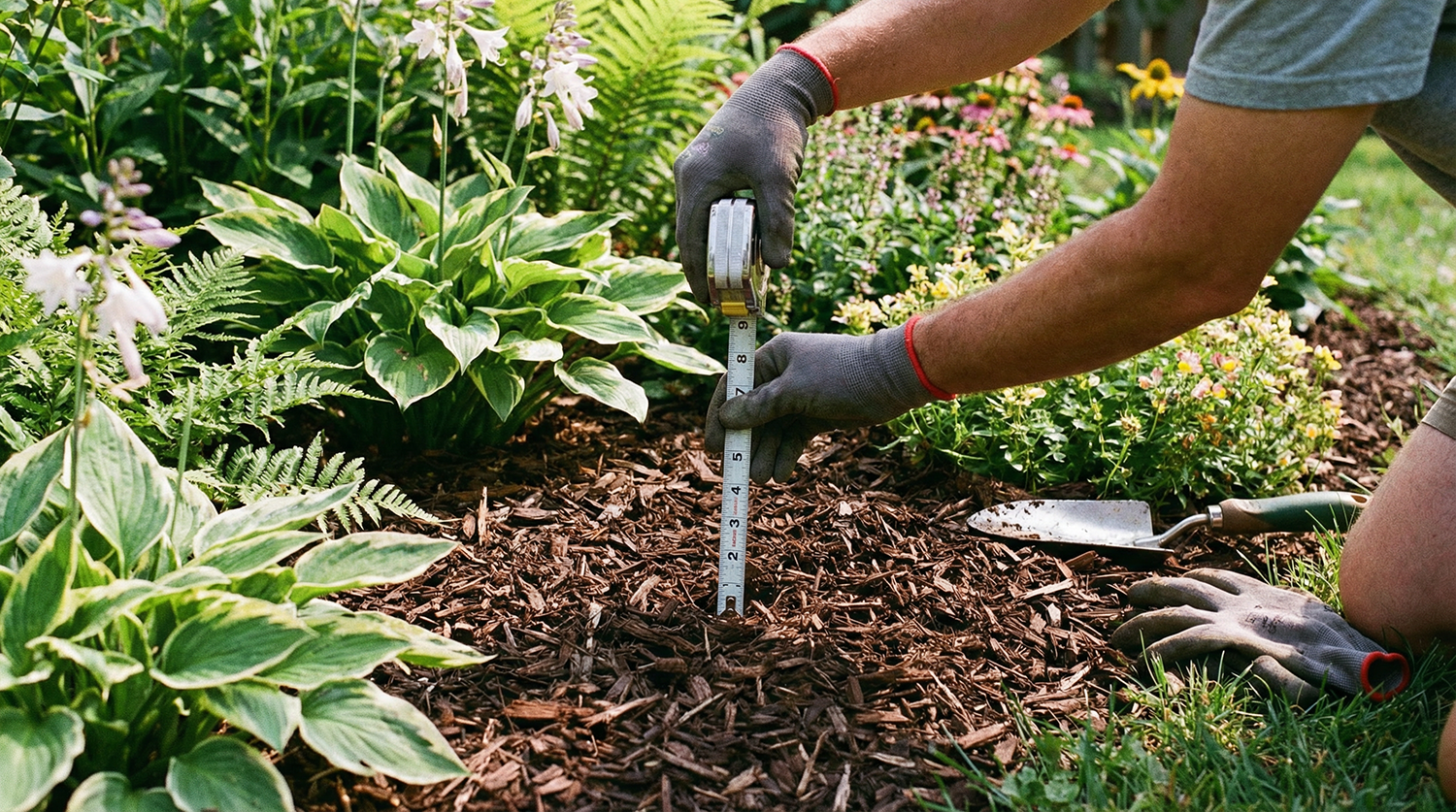
How Much Mulch Is Enough? (Hint: Not 6 Inches)
One of the most common mistakes we see in Asheville landscapes is over-mulching.
The ideal depth for most garden beds is:
Mulch Depth = 2-3 inches
Anything beyond this can:
Suffocate plant roots
Trap excessive moisture
Encourage fungal disease
Attract pests
Mulch volcanoes — piling mulch high against tree trunks — are especially damaging. Always pull mulch a few inches away from trunks and stems.
At Snow Creek Landscaping, we train our crews to apply mulch evenly and precisely, never excessively.
Choosing the Right Mulch for Asheville Landscapes
Not all mulch performs equally in mountain environments.
Here are the most common options:
Double-Ground Hardwood Mulch
Most popular choice in Asheville
Natural look
Breaks down gradually to improve soil
Stays in place on sloped terrains
Excellent for most residential landscapes
Dyed Mulch (Black or Brown)
Longer-lasting color
Sharp contrast for modern homes
Requires professional application for best appearance
Double Ground Pine Bark Mulch
Good drainage
Improves soil pH
Slower breakdown
Can shift on steep slopes
Leaf Compost
Ideal soil amendment
Best used beneath a decorative mulch layer
Snow Creek Landscaping typically recommends double-shredded hardwood mulch for most Asheville homeowners because it balances performance, aesthetics, and soil health.
Preparing Your Landscape Before Mulching
Mulch should never be applied over debris. March is also cleanup season.
Before mulching, Snow Creek Landscaping performs:
Removal of fallen limbs and winter debris
Cutting back dead perennials
Edging garden beds cleanly
Light pruning where appropriate
Soil conditioning if needed
Edging is especially important. A sharp bed edge:
Keeps mulch contained
Improves drainage
Creates visual definition
Prevents grass intrusion
Professional edging alone can dramatically elevate the appearance of your landscape.
Special Considerations for Sloped Asheville Landscapes
Many homes in Asheville sit on hillsides. Improper mulch installation on slopes can lead to washout during heavy spring rains.
For sloped areas:
Use shredded mulch that interlocks
Avoid oversized bark nuggets
Install clean bed edges to reduce runoff
Consider erosion-control strategies for steep areas
Snow Creek Landscaping often evaluates slope grade before applying mulch to ensure it stays in place throughout the season.
How Mulching Reduces Summer Work
March mulching isn’t just about spring beauty — it reduces long-term maintenance.
Benefits throughout the season:
Fewer weeds to pull
Less watering needed
Healthier root systems
Reduced soil compaction
Improved plant vigor
Homeowners who skip mulching often find themselves battling weeds and dry soil by June.
When Snow Creek Landscaping maintains properties that were mulched properly in March, they require significantly less corrective work later.
Signs Your Landscape Needs Fresh Mulch
Not sure if your landscape needs a refresh?
Look for:
Faded gray mulch color
Bare spots exposing soil
Compacted, crusted mulch layers
Weed breakthrough
Uneven distribution
Thin coverage under shrubs
If mulch has broken down to less than 1 inch thick, it’s time to replenish.
Snow Creek Landscaping recommends evaluating mulch depth annually — especially in Asheville where rainfall accelerates decomposition.
Should You DIY or Hire a Professional?
Many Asheville homeowners attempt DIY mulching. While possible, it’s more labor-intensive than most expect.
Consider:
One cubic yard of mulch weighs 800–1,000 pounds
Uneven spreading affects plant health
Improper depth causes long-term issues
Edging tools and skill make a major difference
Professional installation ensures:
Correct depth
Clean edges
Even distribution
Protection around tree trunks
Efficient completion
Snow Creek Landscaping handles delivery, placement, bed preparation, and cleanup — leaving your landscape polished and ready for spring.
Timing Around Late Frost in Asheville
A common question we receive at Snow Creek Landscaping is:
“Should I wait until frost season is completely over?”
The answer: No.
Mulch actually helps protect plant roots from frost fluctuations. Since it insulates soil, applying it in March can reduce root stress during late cold snaps.
Just avoid mulching frozen ground. Soil should be workable and not saturated.
Pairing Mulch With Pre-Season Maintenance
March mulching pairs perfectly with:
Pre-emergent weed treatment
Shrub fertilization
Tree inspection
Drainage assessment
Landscape lighting adjustments
Snow Creek Landscaping often bundles these services together for homeowners preparing their properties for spring entertaining and curb appeal.
The Visual Impact of March Mulching
Beyond plant health, mulch sets the tone for the entire property.
Fresh mulch:
Frames garden beds
Highlights plant color
Enhances hardscape contrast
Signals care and attention
In competitive Asheville neighborhoods, a well-maintained landscape stands out immediately.
Snow Creek Landscaping has seen properties gain noticeable curb appeal improvements within hours of a mulch refresh.
Final Thoughts: Start March Strong
Asheville’s growing season moves quickly once it begins. March is your window to get ahead of:
Weed pressure
Soil erosion
Moisture inconsistency
Summer maintenance overload
Mulching is not just cosmetic — it’s foundational to a healthy landscape.
If you want your Asheville landscape to thrive from spring through fall, start with proper March mulching.
Snow Creek Landscaping serves homeowners throughout Asheville and surrounding communities with professional landscape maintenance, bed preparation, and expert mulch installation. Our team understands the nuances of mountain terrain, soil conditions, and seasonal timing — ensuring your landscape is prepared for everything Western North Carolina brings.
Ready to refresh your landscape this March?
