
Evergreen Trees That Make a Statement: Specimen Trees for Asheville Landscapes
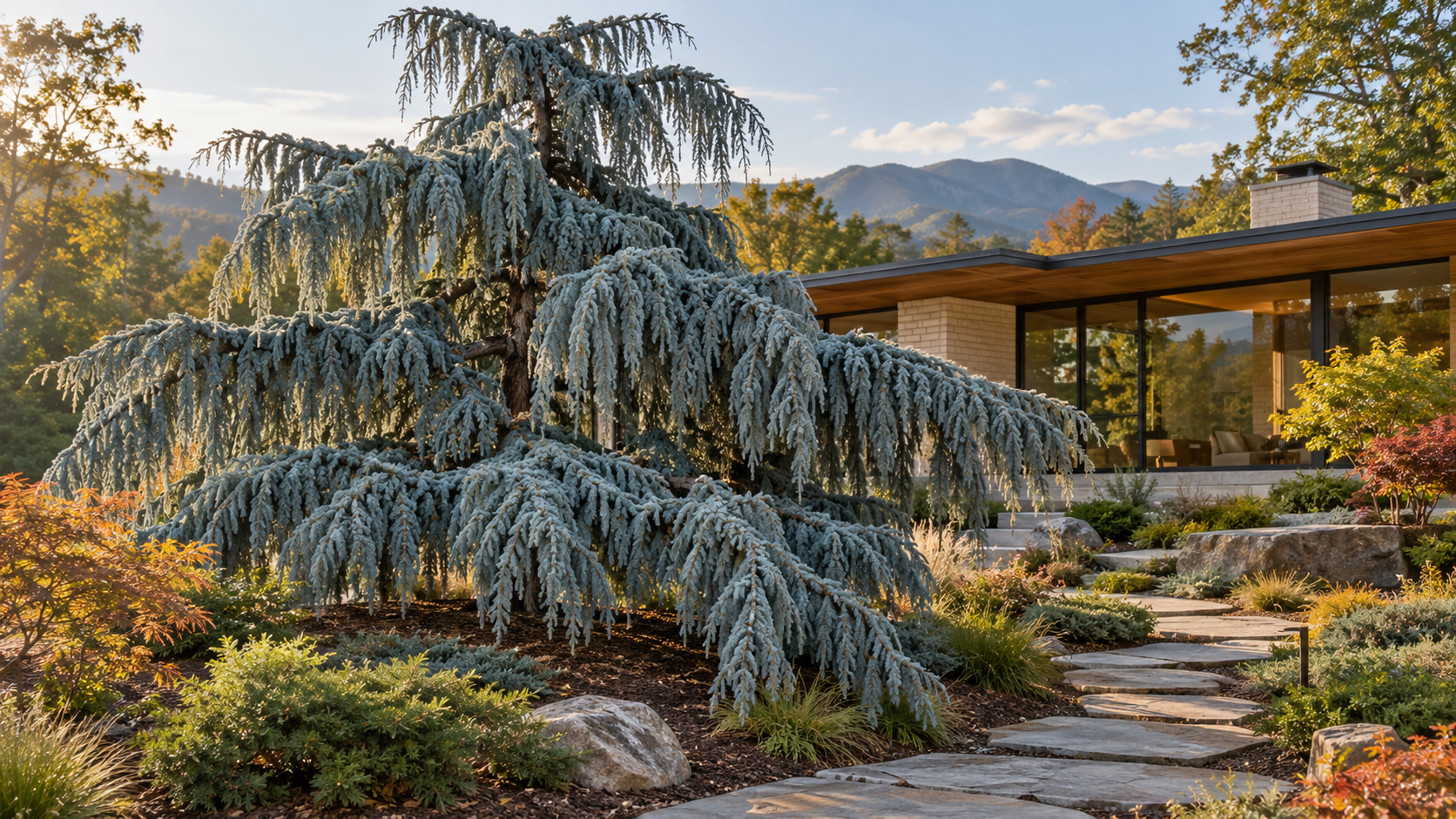
Some trees do more than fill a space. They give a landscape a focal point—a feature that draws your attention and makes the property feel distinctive.
A specimen tree is selected and positioned for that role. Its branching, foliage, shape, or seasonal interest makes it worth noticing on its own. Evergreen specimens offer an additional benefit: they continue contributing structure when surrounding deciduous trees lose their leaves.
For homeowners in Asheville and surrounding Western North Carolina communities, the right evergreen can frame an entrance, complement a mountain home, or become the centerpiece of a garden.
Snow Creek Landscaping helps homeowners select trees that combine visual appeal with practical suitability. Local growing conditions, available space, and future maintenance all matter when choosing a feature that may remain in the landscape for decades.
What Makes an Evergreen a Specimen Tree?
A specimen tree doesn’t have to be enormous or unusual. It simply needs a distinctive quality and a location that allows that quality to be appreciated.
A weeping tree might provide movement beside a stone terrace. A neatly shaped evergreen might bring balance to a home’s architecture. A softer, more natural form can help connect a planted garden with surrounding woodland.
Placement makes the difference. Even an attractive tree can lose its impact when crowded among similar plants or tucked into a space where its branching is hidden.
Snow Creek Landscaping considers how a tree will look from the driveway, front entrance, patio, and windows. A successful specimen should improve the views homeowners experience every day.
Weeping Blue Atlas Cedar: A Sculptural Focal Point
Weeping Blue Atlas cedar brings distinctive branching and blue foliage to a landscape. Its cascading form can create an expressive focal point, particularly where it has room to develop without being crowded.
Unlike trees with a predictable upright shape, its appearance is influenced by training and support. That makes it important to choose and position the tree with its intended form in mind.
It can complement natural stone and lower plantings that allow the branches to remain visible. A location beside a terrace or within a prominent garden bed may provide an opportunity to appreciate its shape from several angles.
Snow Creek Landscaping can evaluate the site and help determine whether this specimen fits the available space and growing conditions.
Hinoki Cypress: Rich Texture and Distinctive Form
Hinoki cypress offers rich evergreen foliage and a layered appearance that can give a planting depth. Its foliage forms flattened sprays, creating a different texture from the needles of cedars or hemlocks.
Cultivar selection is especially important. Hinoki cypress includes forms with substantially different growth habits and mature sizes, so homeowners should choose a specific selection rather than relying on the general plant name.
A smaller cultivar may suit a carefully composed garden near an entrance, while a larger form needs more room. Its shape can work well with understated companion plants and natural materials.
Snow Creek Landscaping can help select a form that fits the design and assess the planting conditions before installation. The goal is to enjoy the tree’s natural character without having to prune it continually to fit the space.
American Holly: A Native Evergreen With Seasonal Interest
American holly offers an evergreen option for homeowners who want a substantial native tree. Its green foliage provides structure throughout the year, while berries on female plants can add seasonal interest when a compatible male pollinator is present.
Its mature size deserves attention. American holly should have room to develop as a tree, rather than being squeezed into a small bed beside the house.
It can serve as a focal point in a larger planting or help connect a designed landscape with a more natural setting. Its leaf texture also contrasts with softer conifers and ornamental grasses.
Snow Creek Landscaping can consider its eventual scale, placement, and pollination needs when incorporating it into a residential landscape.
Cryptomeria: Soft Texture and Evergreen Structure
Cryptomeria, also called Japanese cedar, is an option Snow Creek Landscaping recommends considering in place of Eastern white pine. The company’s local experience with Eastern white pine has not supported recommending it for this role.
Cryptomeria introduces a softer foliage texture and can provide a substantial evergreen presence. However, the plant name covers selections with different sizes and habits. Some develop into large trees, while others remain more compact.
A tree-form selection can become a focal point within an open landscape. Smaller selections may suit a more limited planting area. Moist, well-drained soil and appropriate exposure remain important considerations.
Snow Creek Landscaping can help homeowners choose a cultivar that fits the property. Selecting for mature size from the beginning gives the tree room to develop and helps keep the surrounding planting balanced.
Hemlock: A Classic Choice With a Care Plan
Eastern hemlock remains a recommendation from Snow Creek Landscaping for suitable locations. Its fine foliage and gently drooping branches can create an elegant specimen, especially in a landscape with a woodland character.
Hemlock prefers moist, well-drained conditions and can suit locations with partial shade. Full-sized trees need substantial growing room, so selecting the right form and location is essential.
Hemlock woolly adelgid is a concern, but it does not automatically rule out planting a hemlock. Monitoring and appropriate treatment can help manage the pest, and treatment demonstrations are offered locally through the Hemlock Restoration Initiative and Cooperative Extension.
Snow Creek Landscaping considers adelgid manageable and treatment generally affordable at this time. Homeowners should include that care in their planning so the tree’s health receives attention alongside its appearance.
Choose the Location Before Choosing the Tree
A specimen tree should fit both the growing conditions and the way the property is used.
Consider drainage, sunlight, overhead clearance, nearby structures, and the tree’s eventual spread. Also think about what will surround it. A feature tree often looks best with quieter companion plants that support its form instead of competing for attention.
Snow Creek Landscaping can evaluate those relationships before planting. A tree positioned with its mature dimensions in mind can improve a landscape over time, while one placed too close to a walkway or building may create avoidable maintenance.
Create a Focal Point That Lasts
An evergreen specimen can bring character to an Asheville landscape in every season. Blue foliage, layered branches, rich green leaves, or soft woodland texture each offer a different way to make a statement.
The best choice depends on more than appearance. It should suit the site, have room to grow, and come with a realistic plan for care.
Snow Creek Landscaping helps homeowners throughout Asheville and surrounding Western North Carolina communities select and position evergreen trees with those goals in mind. A thoughtfully chosen specimen can become a feature you appreciate from the day it is planted and for years afterward.
