
Blue-Green Evergreens That Add Incredible Color to the Landscape
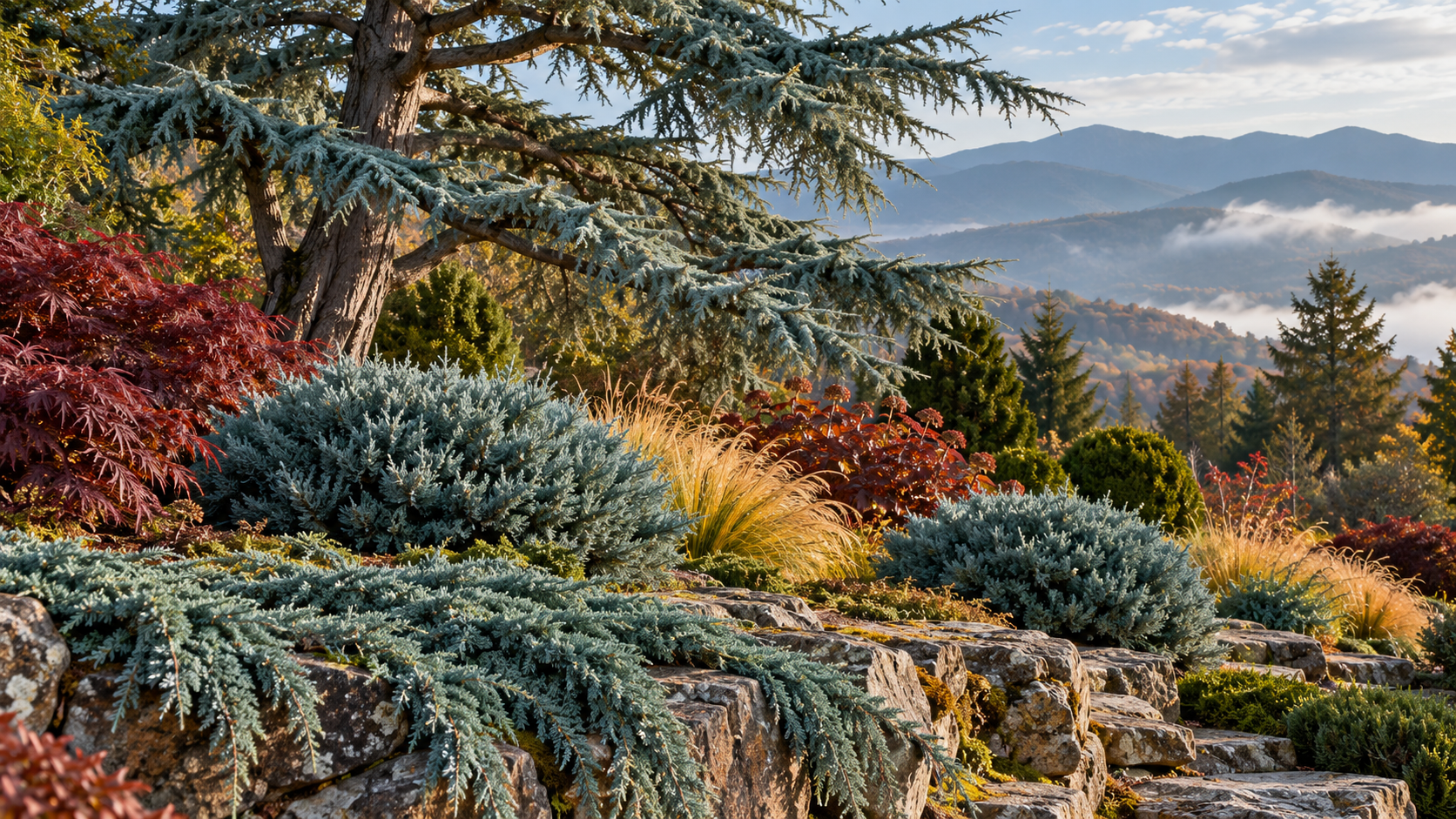
A landscape doesn’t need flowers to have beautiful color. While blooming perennials and deciduous trees often get the attention, evergreens can introduce shades of blue, silver, and soft green that remain interesting long after the flowers fade.
For homeowners in Asheville and surrounding Western North Carolina communities, these cooler foliage colors offer a way to add contrast without relying entirely on seasonal blooms. Against stone pathways, warm wood accents, and the reds and golds of autumn, blue-green evergreens can become some of the most striking features in a landscape.
The key is choosing plants that fit the property’s growing conditions. Snow Creek Landscaping considers drainage, sunlight, mature size, and local performance when selecting evergreens. A beautiful nursery specimen should also be a practical long-term choice for your home.
Why Blue-Green Foliage Works So Well
Most landscapes contain plenty of green. Introducing a different shade helps individual plants stand out while keeping the overall design natural.
Blue-green foliage can soften the appearance of a foundation planting, brighten a sunny slope, or draw attention to an entrance. It also creates a useful backdrop for plants with burgundy leaves, golden foliage, or warm fall color.
These evergreens don’t all serve the same purpose. Some form low mounds, while others develop into substantial trees. Snow Creek Landscaping can help homeowners choose the right scale, whether the goal is a subtle accent beside a walkway or a focal point visible from the living room.
A few carefully placed plants often create a stronger effect than filling every bed with the same color.
Blue Star Juniper: A Compact Accent
Blue Star juniper is an option for homeowners who want silvery-blue foliage in a smaller planting area. Its compact, mounding form introduces texture without requiring the space of a full-sized tree.
It can work in sunny rock gardens, along the front of planting beds, or near stone features where its foliage provides contrast. Repeating a few plants through a bed can help connect different parts of the design.
Good drainage is essential. Blue Star juniper should not be treated as a solution for a low spot that stays wet after rain. Its best placement is a sunny location where water can move away from the roots.
Snow Creek Landscaping can evaluate the planting area before recommending it, helping homeowners avoid choosing a plant for its color alone.
Blue-Toned Junipers for Larger Plantings
Other juniper selections offer different shapes and sizes, giving homeowners options beyond a low mound. Chinese juniper cultivars include blue-toned selections that can contribute upright structure or a broader accent within a mixed planting.
The important decision is which cultivar fits the available space. An evergreen that looks modest in a nursery container may eventually occupy much more of a bed than expected.
An upright selection might frame a view or mark a transition between landscape areas. A spreading selection may help soften the edge of a sunny planting bed.
Snow Creek Landscaping considers both the immediate appearance and the eventual footprint. That planning helps prevent overcrowding and reduces the need for repeated pruning simply to keep a plant within its allotted space.
Blue Atlas Cedar: Color With Presence
Blue Atlas cedar offers a different kind of impact. Its blue needles and distinctive branching make it a candidate for a prominent position where its form can be appreciated.
This is a tree that deserves thoughtful placement. An upright Blue Atlas cedar can become large, making it better suited to an open landscape than a narrow foundation bed. Weeping forms provide another option, with growth and spread influenced by how they are trained.
Rather than surrounding a specimen with competing plants, leave enough visual space for its branching to become part of the design. Lower plantings can support the composition without hiding the feature tree.
Snow Creek Landscaping can assess whether the site offers suitable drainage, exposure, and room for the selected form.
Local Experience Matters More Than a Plant Label
A plant’s appearance doesn’t tell the whole story. Regional rainfall, soil conditions, and the characteristics of an individual property all affect how an evergreen performs.
Based on its local experience, Snow Creek Landscaping does not recommend blue cypress selections such as Blue Ice and Carolina Sapphire for these landscapes. The company has found that the region’s wet conditions can make long-term success unreliable, similar to its experience with blue spruce.
That is why plant selection should begin with the site rather than a photograph. Even other blue-toned evergreens need suitable conditions; removing one unreliable recommendation doesn’t make every alternative appropriate for every property.
Snow Creek Landscaping’s experience in Asheville and Western North Carolina helps guide choices toward plants that suit the actual planting location.
Pair Cool Foliage With Warm Seasonal Color
Blue-green evergreens become especially appealing in autumn. Their cooler tones create contrast beside orange leaves, golden grasses, and burgundy foliage.
A compact blue evergreen near ornamental grasses can provide a steady visual anchor as the grasses change through the season. A larger specimen can stand against a backdrop of deciduous trees, becoming more visible as their leaves fall.
Natural materials contribute to the effect. Warm wood, weathered stone, and a simple layer of mulch can highlight foliage without making the planting feel busy.
Snow Creek Landscaping can combine these elements so the evergreen belongs to the entire composition. The goal is a landscape that feels connected throughout the year, with each season bringing a different feature forward.
Give the Plants Room to Succeed
Successful planting involves more than digging a hole. Before installing an evergreen, consider how water moves through the area, how much sunlight reaches it, and whether nearby plants will eventually shade or crowd it.
New plants also need attention while their roots establish. Watering should respond to rainfall and soil moisture, rather than following the same schedule regardless of conditions. Mulch can help moderate soil moisture, but it should stay away from trunks and stems.
For blue-green evergreens, thoughtful placement is particularly important because many are chosen as visible accents. A struggling plant in a focal position can affect the appearance of the entire bed.
Bring Lasting Color to Your Asheville Landscape
Blue-green evergreens can add depth, contrast, and year-round interest to a home landscape. Whether you prefer a compact juniper or a distinctive specimen tree, the best choice combines attractive foliage with a suitable planting site.
Snow Creek Landscaping helps homeowners in Asheville and surrounding Western North Carolina communities make those decisions with local conditions in mind. With the right selection and placement, an evergreen can become a lasting part of a landscape you enjoy in every season.
