
Spring Drainage Solutions for Sloped Landscapes in Western North Carolina
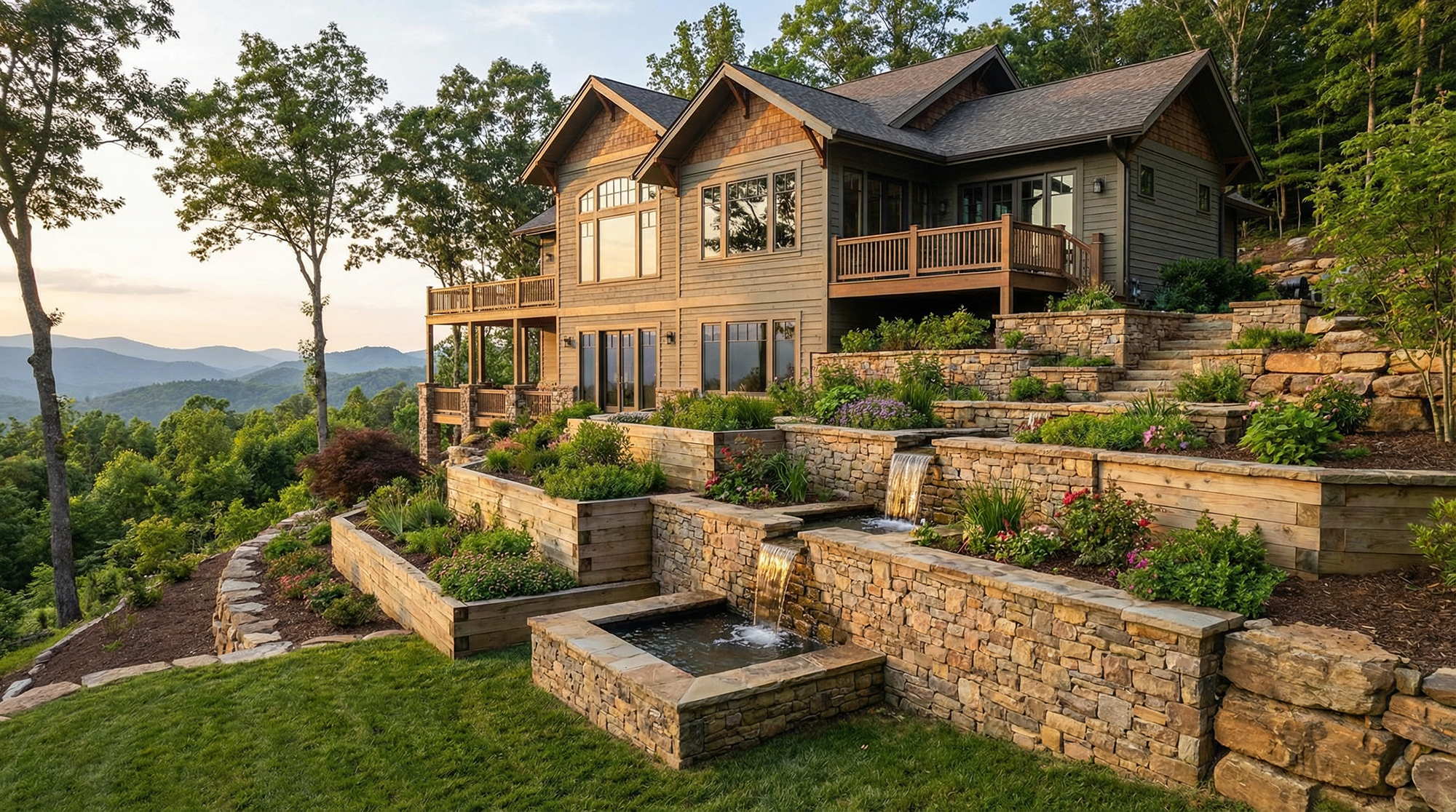
Spring in Asheville and throughout Western North Carolina is a beautiful time of year. Trees bloom, temperatures warm, and landscapes begin to wake up from winter dormancy. But along with the beauty of spring comes one of the region’s most persistent landscape challenges: water management on sloped properties.
Because many homes in Asheville and surrounding mountain communities are built on hillsides or uneven terrain, spring rainfall can quickly turn into runoff problems. Without proper drainage planning, excess water can erode soil, damage plants, saturate foundations, and create muddy, unusable areas across the landscape.
The good news is that these issues are preventable with the right drainage solutions. At Snow Creek Landscaping, homeowners throughout the Asheville area frequently turn to professional landscape design and installation to solve drainage problems before they become costly repairs.
Below are some of the most effective drainage solutions for sloped landscapes in Western North Carolina.
Why Drainage Is So Important in Mountain Landscapes
Western North Carolina receives significant rainfall during the spring months. Combined with the region’s clay-heavy soils and steep terrain, water often moves quickly across a landscape rather than absorbing evenly into the ground.
When drainage is not properly managed, several problems can develop:
Soil erosion along slopes
Washed-out mulch and landscape beds
Standing water near foundations
Saturated lawns and plant roots
Damage to patios, walkways, and retaining walls
These issues are particularly common in Asheville neighborhoods built along hillsides or ridgelines. Proper drainage planning ensures that water flows away from the home and toward controlled outlets, protecting both the landscape and the structure.
Snow Creek Landscaping often begins drainage projects by evaluating the grade, soil composition, runoff patterns, and existing landscape features before recommending solutions tailored to the property.
French Drains: One of the Most Effective Solutions
One of the most common drainage solutions used in mountain landscapes is a French drain system.
A French drain works by capturing water through a gravel-filled trench that contains a perforated pipe. Water flows into the trench, enters the pipe, and is redirected away from the problem area.
French drains are particularly useful for:
Diverting water from foundations
Managing runoff along slopes
Preventing landscape bed erosion
Eliminating soggy sections of the landscape
When installed correctly, French drains are nearly invisible because they are buried beneath gravel, sod, or landscape beds.
At Snow Creek Landscaping, French drains are often integrated into larger drainage strategies so that runoff is directed to appropriate exit points such as storm drains, dry wells, or natural drainage areas.
Dry Creek Beds: Functional and Beautiful
Another highly effective drainage option for sloped landscapes is the dry creek bed.
Dry creek beds mimic the appearance of natural mountain streams while guiding water safely through the landscape during heavy rains. They are lined with stone and river rock, allowing runoff to move through the landscape without eroding soil or damaging plantings.
Benefits of dry creek beds include:
Preventing erosion on steep slopes
Managing heavy runoff during storms
Enhancing the visual character of the landscape
Blending naturally with Western North Carolina environments
In many Asheville landscapes, dry creek beds also become attractive design features. They can be incorporated into landscape beds, bordered with native plants, or connected to rain gardens to further improve water absorption.
Snow Creek Landscaping frequently designs dry creek beds that feel natural to the mountain environment while solving serious drainage problems.
Retaining Walls for Water and Soil Control
For properties with steep slopes, retaining walls often play a critical role in drainage management.
Retaining walls help stabilize soil while also redirecting water flow. Without them, gravity and rainfall can cause soil to shift downhill over time.
Properly designed retaining walls:
Prevent erosion
Create usable flat spaces in sloped landscapes
Manage water runoff between levels
Protect landscape beds and structures
Many Asheville homeowners choose natural stone retaining walls that match the mountain aesthetic. In addition to structural support, these walls can include integrated drainage systems, allowing water to escape through gravel backfill and drainage pipes.
Snow Creek Landscaping specializes in retaining wall installations that balance engineering, durability, and landscape design.
Catch Basins and Channel Drains
In some landscapes, water tends to collect in low areas rather than flowing naturally downhill. In these cases, catch basins or channel drains can be installed to collect water and redirect it safely away from the home.
Catch basins work like underground collection boxes that gather water from the surface and channel it into drainage pipes.
These systems are particularly useful for:
Driveway runoff
Water collecting near patios or walkways
Low spots in the landscape
Areas where multiple slopes converge
Once collected, the water is carried through underground piping to a designated drainage outlet.
Snow Creek Landscaping often incorporates catch basins into larger drainage networks to ensure that every section of the landscape drains properly during heavy spring storms.
Strategic Landscape Grading
Sometimes the most effective drainage solution is also the simplest: proper grading.
Landscape grading involves reshaping the slope of the soil to encourage water to move away from structures and toward appropriate drainage areas.
Even small changes in grading can dramatically improve water flow across a landscape.
Benefits of professional grading include:
Preventing foundation water intrusion
Improving lawn health
Reducing standing water
Preparing the landscape for new plantings or hardscapes
Because grading must be carefully planned to avoid unintended runoff issues, many homeowners rely on experienced professionals like Snow Creek Landscaping to evaluate and adjust their landscape’s slope.
Native Plants That Help Manage Water
In addition to structural drainage solutions, plant selection can also improve water management.
Many native Western North Carolina plants have deep root systems that stabilize soil and absorb moisture more effectively than shallow-rooted plants.
Some excellent choices include:
Switchgrass
River birch
Inkberry holly
Black-eyed Susan
Mountain mint
Native ferns
Strategically placed plantings help slow water movement, reduce erosion, and improve overall landscape health.
Snow Creek Landscaping frequently incorporates native plant palettes that support both drainage performance and ecological sustainability.
Why Professional Drainage Design Matters
Drainage issues rarely have a single cause. Instead, they usually result from a combination of slope, soil type, rainfall patterns, and landscape design.
Attempting quick fixes—such as adding gravel or redirecting downspouts—can sometimes make the problem worse.
Professional drainage design considers the entire system, including:
Water flow patterns
Soil composition
Landscape grading
Existing structures
Long-term erosion risks
Snow Creek Landscaping works closely with homeowners across Asheville and surrounding communities to develop comprehensive drainage strategies that protect landscapes for years to come.
Preparing Your Landscape for Spring Rains
If you notice water pooling, soil washing away, or soggy areas in your landscape each spring, it may be time to address drainage before the rainy season intensifies.
Some warning signs include:
Muddy or saturated areas after storms
Mulch or soil washing downhill
Water collecting near the home’s foundation
Landscape beds collapsing or eroding
Addressing these issues early can prevent larger problems later.
The team at Snow Creek Landscaping helps homeowners throughout Western North Carolina evaluate drainage challenges and implement solutions that work with the region’s unique terrain.
Partnering with Snow Creek Landscaping
Mountain landscapes are beautiful, but they also require thoughtful design to manage water properly.
Whether your property needs French drains, retaining walls, grading improvements, or natural drainage features like dry creek beds, Snow Creek Landscaping has the experience and local expertise to create solutions that protect both your home and your landscape.
By addressing drainage challenges early, homeowners in Asheville and across Western North Carolina can enjoy a landscape that remains healthy, stable, and beautiful throughout the spring and beyond.
