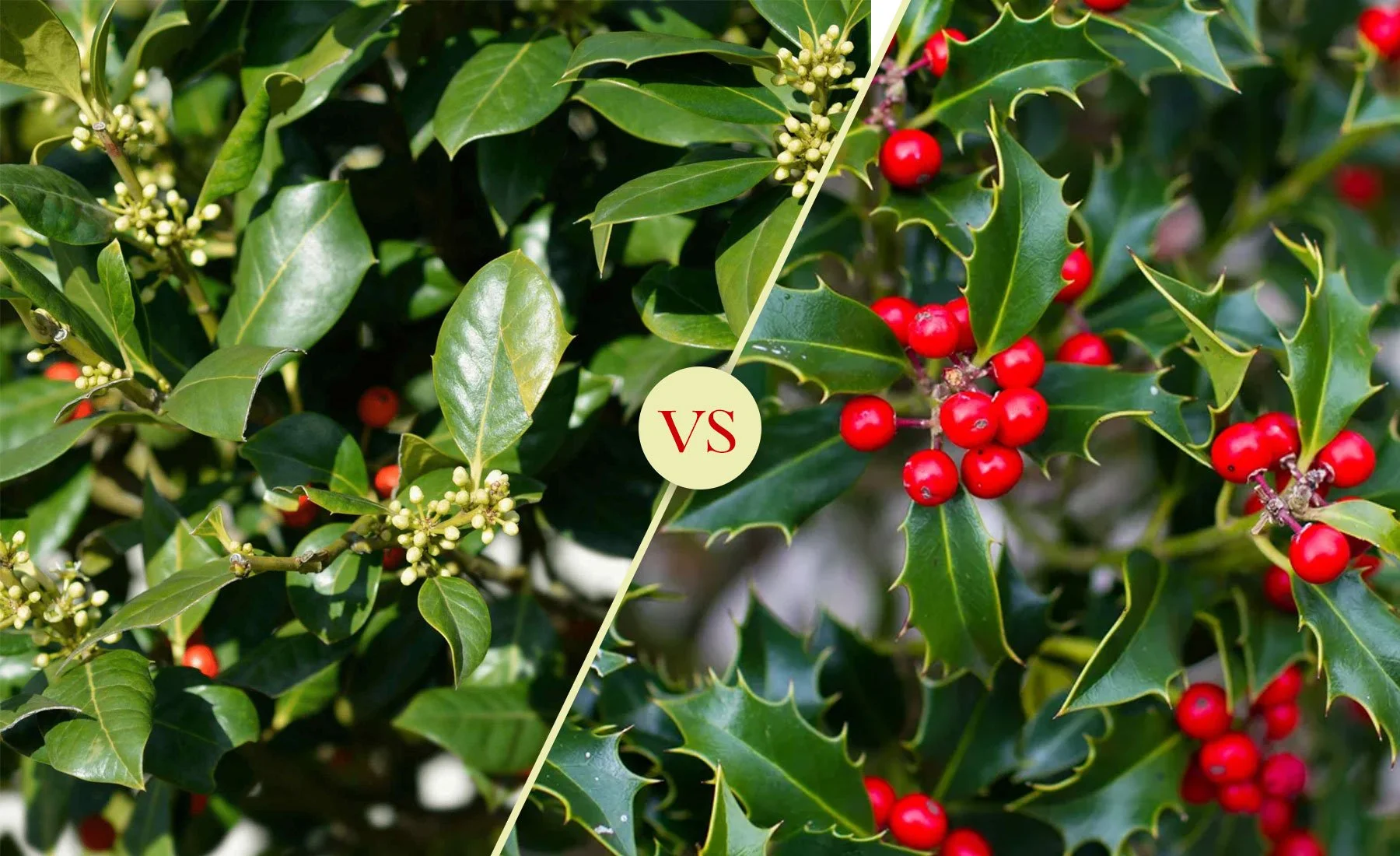
American Holly vs. Nellie Stevens Holly: Which Makes the Better Privacy Screen?
For homeowners in Asheville, NC and throughout Western North Carolina, privacy screening is one of the most common landscape goals. Whether you're looking to create a more secluded outdoor living space, block neighboring views, reduce road noise, or enhance your property's beauty, evergreen screening plants are often the ideal solution.
Among the many options available, two holly varieties consistently rise to the top of the list: American Holly and Nellie Stevens Holly. Both are attractive, evergreen trees that provide year-round screening, but they differ significantly in appearance, growth habits, maintenance requirements, and overall performance.
At Snow Creek Landscaping, we help homeowners throughout Asheville and the surrounding communities choose the right privacy screening plants for their unique landscapes. Let's compare these two popular holly varieties to help determine which might be the better fit for your property.
Why Hollies Are Popular Privacy Screens
Hollies have long been valued for their dense foliage, evergreen color, wildlife benefits, and adaptability. Unlike some screening plants that lose their leaves during winter, hollies maintain their rich green appearance throughout the year.
Benefits of holly privacy screens include:
Year-round privacy
Attractive evergreen foliage
Wildlife habitat and food sources
Strong resistance to pests and diseases
Excellent durability in Western North Carolina's climate
Minimal maintenance once established
While both American Holly and Nellie Stevens Holly offer these benefits, they do so in different ways.
American Holly: A Native Classic
American Holly (Ilex opaca) is native to much of the eastern United States, including parts of North Carolina. It is perhaps the most iconic holly species in America and is often recognized by its glossy green leaves and bright red berries.
Mature Size
American Holly typically reaches:
30 to 50 feet tall
15 to 25 feet wide
Although it can eventually become quite large, its growth rate is relatively slow compared to other screening options.
Appearance
American Holly offers a traditional, natural appearance with:
Deep green foliage
Distinctive spiny leaves
Bright red berries on female trees
Pyramidal growth habit
Its classic look makes it an excellent choice for homeowners seeking a more natural landscape aesthetic.
Benefits of American Holly
Native Plant Advantage
As a native species, American Holly supports local ecosystems and provides habitat for birds and pollinators.
Excellent Wildlife Value
The berries attract birds throughout the winter, while the dense branches offer nesting and shelter opportunities.
Longevity
American Holly is known for its exceptional lifespan and durability. A properly planted specimen can remain a beautiful part of a landscape for decades.
Natural Appearance
Homeowners who prefer a less formal privacy screen often appreciate American Holly's softer, more natural growth habit.
Potential Drawbacks
The primary limitation of American Holly is its slower growth rate. Homeowners seeking immediate privacy may need patience, as these trees can take years to reach full screening height.
Nellie Stevens Holly: The Fast-Growing Favorite
Nellie Stevens Holly (Ilex x 'Nellie R. Stevens') is a hybrid holly that has become one of the most popular privacy screening plants in the Southeast.
At Snow Creek Landscaping, it is often one of the first recommendations for homeowners who want fast, reliable screening.
Mature Size
Nellie Stevens Holly typically grows:
20 to 30 feet tall
10 to 15 feet wide
Its narrower profile makes it easier to fit into many residential landscapes.
Appearance
Nellie Stevens Holly features:
Dark green glossy leaves
Dense branching structure
Bright red berries
Uniform pyramidal shape
Its naturally symmetrical form creates a polished, elegant appearance.
Benefits of Nellie Stevens Holly
Faster Growth
One of the biggest advantages is growth rate. Nellie Stevens Holly can grow approximately two to three feet per year under favorable conditions.
This allows homeowners to achieve privacy much more quickly than with American Holly.
Dense Screening
The foliage is exceptionally thick, creating an effective visual barrier even during winter months.
Lower Maintenance
Because of its naturally uniform growth habit, Nellie Stevens Holly generally requires minimal pruning.
Adaptability
It performs well in a variety of soil types and landscape conditions commonly found throughout Asheville and Western North Carolina.
Potential Drawbacks
Because it is a hybrid rather than a native species, Nellie Stevens Holly does not provide quite the same ecological benefits as American Holly.
Additionally, its dense growth may eventually require occasional thinning to maintain airflow and plant health.
Which Holly Creates Better Privacy?
If your primary goal is rapid privacy, Nellie Stevens Holly is usually the winner.
Its faster growth rate and dense branching allow homeowners to establish an effective privacy screen in a much shorter period of time.
For example, a newly installed row of Nellie Stevens Holly may begin providing meaningful screening within just a few years, while American Holly may take considerably longer to achieve the same result.
Which Holly Is Better for Wildlife?
American Holly earns the advantage when wildlife support is a priority.
As a native species, it provides important habitat and food sources for native birds and other wildlife throughout the year.
For homeowners interested in creating a more environmentally beneficial landscape, American Holly is often an excellent choice.
Which Holly Is Better for Smaller Landscapes?
Many residential properties in Asheville have limited planting space.
Because Nellie Stevens Holly tends to be narrower and more compact, it often works better along property lines, fences, driveways, and smaller landscape areas.
American Holly's larger mature size requires more room for long-term success.
Which Holly Looks Better?
This often comes down to personal preference.
Choose American Holly if you prefer:
A native landscape
Traditional Southern charm
A more natural appearance
Wildlife-friendly plantings
Choose Nellie Stevens Holly if you prefer:
Fast privacy
Formal appearance
Dense screening
Low-maintenance performance
The Best Choice for Your Asheville Landscape
The truth is that both American Holly and Nellie Stevens Holly can be outstanding privacy screening plants when matched to the right landscape goals.
At Snow Creek Landscaping, we frequently incorporate both varieties into custom landscape designs depending on the homeowner's priorities, available space, and desired timeline for privacy.
For homeowners who want quick results and dense year-round screening, Nellie Stevens Holly is often the preferred solution. For those who value native plants, wildlife support, and long-term natural beauty, American Holly remains a timeless favorite.
If you're considering a privacy screen for your Asheville-area property, Snow Creek Landscaping can help you evaluate your landscape, select the ideal plants, and create a screening solution that enhances both privacy and curb appeal for years to come.
